Physical Address
304 North Cardinal St.
Dorchester Center, MA 02124
Physical Address
304 North Cardinal St.
Dorchester Center, MA 02124

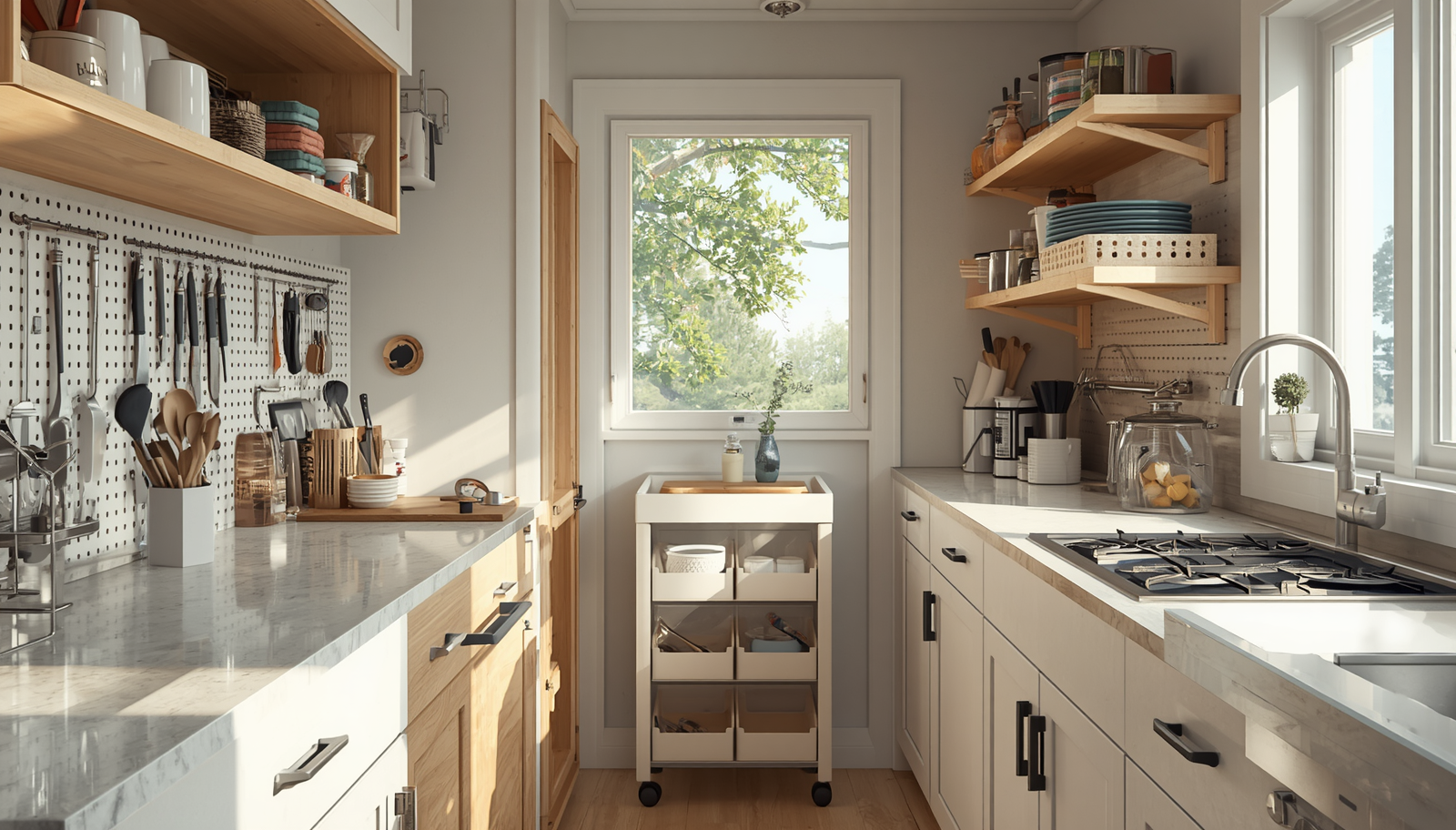
These 10 creative kitchen gadget storage ideas help you maximize every inch of a small kitchen with clever organization solutions that reduce clutter and make cooking more enjoyable.
The drawer jammed halfway open. Somewhere beneath a pile of measuring spoons, a vegetable peeler, and at least three gadgets I forgot I owned, something had staged a rebellion.
If you live with a small kitchen, you probably know the feeling.
Kitchen gadgets seem harmless when you buy them. A handy avocado slicer here. A compact food chopper there. Then one day you realize your cabinets are packed tighter than an overstuffed suitcase before a family vacation.
As a freelancer, business owner, blogger, wife, and mom, I spend a lot of time in the kitchen. Between quick weekday dinners, weekend baking projects with my daughter, and testing recipes for blog content, I learned one important lesson.
A small kitchen can work beautifully if every gadget has a smart home.
The good news is that you do not need a larger kitchen. You simply need better storage strategies. These 10 creative kitchen gadget storage ideas for small spaces can help you maximize every inch while keeping your kitchen functional and clutter-free.


Small kitchens force you to be intentional.
Every cabinet, drawer, shelf, and wall becomes valuable real estate.
When gadgets pile up without a system, cooking becomes frustrating. You waste time searching for tools. Cabinets become difficult to use. Countertops disappear under clutter.
Good storage solves those problems and makes the entire kitchen feel larger.


Most people ignore the inside of cabinet doors.
That space can become surprisingly useful.
I added adhesive hooks inside one cabinet and immediately gained storage for measuring cups and spoons. Suddenly, an overcrowded drawer had room to breathe again.
Takeaway: Hidden storage often exists right in front of you.


A pegboard turns an empty wall into a storage powerhouse.
It also keeps frequently used tools within easy reach.
I resisted this idea for years because I thought pegboards belonged in garages. Turns out they look surprisingly stylish in kitchens when organized thoughtfully.
Takeaway: Vertical storage frees valuable cabinet and drawer space.


Large gadgets can dominate a small kitchen.
A rolling cart provides flexible storage without permanent commitment.
I once used a cart to store my mixer, blender, and air fryer. When I needed extra workspace, I simply rolled it elsewhere.
FYI, this works especially well for renters.
Takeaway: Mobile storage adapts to changing kitchen needs.


Deep shelves waste space when everything sits at the same level.
Tiered organizers create multiple storage layers.
Instead of stacking gadgets on top of each other, you can see everything at a glance.
Takeaway: Vertical levels maximize existing cabinet space.


Reaching into deep cabinets often feels like an archaeological excavation.
Pull-out baskets solve that problem.
Everything slides forward, making gadgets easy to access.
I added pull-out organizers under my counter and instantly stopped losing items in the back corners.
Takeaway: Accessibility matters just as much as storage capacity.


One of my biggest organizational mistakes was storing gadgets wherever they fit.
Now I group items based on how I use them.
The system reduces unnecessary movement around the kitchen.
Takeaway: Store gadgets where you actually use them.


Magnets can save a surprising amount of space.
Most people think of knife strips, but magnetic storage extends much further.
You can use magnetic racks for lightweight metal tools and accessories.
The result feels clean and efficient.
Takeaway: Magnetic storage turns unused wall space into practical storage.


Clear bins create instant organization.
I use them to group gadgets by category, which prevents cabinets from becoming chaotic.
The best part is visibility.
You can quickly identify what you need without digging through piles of tools.
Takeaway: Grouping similar items reduces clutter and frustration.


Small kitchens often contain awkward gaps between appliances and cabinets.
Those narrow spaces can become valuable storage areas.
Slim rolling organizers fit perfectly into these overlooked zones.
IMO, some of the best storage opportunities hide in the smallest spaces.
Takeaway: Even a few inches of unused space can provide useful storage.


No storage solution works if you own too much stuff.
Before buying organizers, take inventory.
I once discovered three identical peelers and two can openers during a kitchen cleanup session. Apparently they had been multiplying in secret. 🙂
Removing unused items often creates the biggest improvement.
Takeaway: Less clutter makes every storage system more effective.
Even smart storage solutions can fail when a few bad habits sneak in.
Broken tools consume space without providing value.
Walls offer enormous storage potential.
Counters should support food preparation, not permanent storage.
Storage products cannot solve excess clutter.
Avoiding these mistakes often creates immediate results.
Organization affects more than storage.
It changes how a kitchen feels.
Open surfaces create visual space.
Consistency reduces visual clutter.
Prime storage should go to everyday essentials.
Think upward whenever possible.
Small kitchens thrive on efficiency.
A small kitchen does not have to feel cramped or chaotic.
The right storage strategies can transform even the tiniest space into a highly functional cooking area.
Start with one drawer, one cabinet, or one storage zone. Small improvements quickly build momentum.
The goal is not creating a perfect kitchen. The goal is creating a kitchen that works for your everyday life.
And if you can finally open a drawer without triggering a gadget avalanche, that is a pretty good sign you’re headed in the right direction.