Physical Address
304 North Cardinal St.
Dorchester Center, MA 02124
Physical Address
304 North Cardinal St.
Dorchester Center, MA 02124

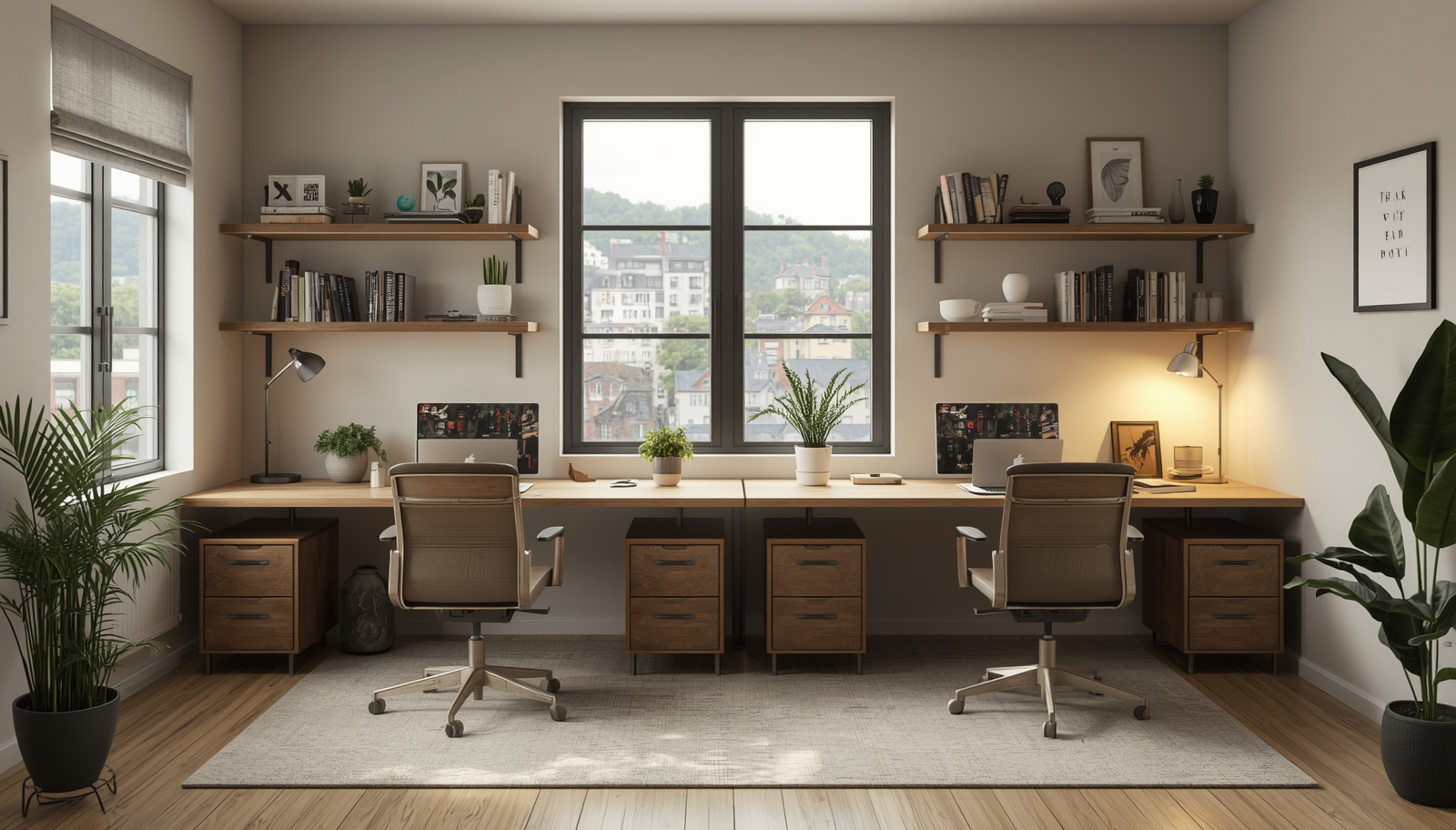
Discover 6 smart shared workspace solutions for a small home office for two that help maximize space, reduce clutter, and make working together at home feel far less chaotic.
One person joins a Zoom call while the other loudly types an email three inches away. Someone steals the good charger again. Coffee mugs slowly multiply across the desk like a science experiment. Meanwhile, both people silently wonder why sharing a small office suddenly feels like competing in a reality show challenge.
Working from home together sounds cute until two careers collide inside one tiny room. I learned that quickly while balancing freelance work, business tasks, and family life in a space that barely fit two chairs comfortably. Add a child running through the background asking for snacks every twenty minutes and things get chaotic fast 🙂
The good news is that a small shared office does not have to feel cramped or stressful. With the right setup, two people can actually work productively in the same room without passive-aggressively fighting over desk space.
Here are the best shared workspace solutions for a small home office for two that genuinely make daily work life easier.
Two bulky desks in a tiny room usually create visual chaos immediately. A single long desk often works much better because it creates a cleaner layout and improves flow.
This setup also makes the room feel more open instead of divided into awkward little sections.


One continuous surface takes up less visual weight than two separate desks.
Managing cords becomes much easier when everything stays centralized.
If both people collaborate often, sitting side by side saves time and feels more natural.
My husband and I once tried squeezing two random desks into one room. It looked like a furniture clearance section exploded in the corner. Switching to one long desk instantly made the office feel calmer.
Takeaway: One long desk creates a cleaner and more functional shared office layout for small spaces.
Sharing a room becomes exhausting when there is zero sense of personal space. Even tiny visual boundaries help people focus better.
The goal is not isolation. The goal is preventing the room from feeling mentally cluttered.


Open shelving creates separation without blocking natural light.
Small acrylic or wood dividers reduce distractions surprisingly well.
Each person can personalize their side without turning the office into visual chaos.
Different rugs subtly define each workspace area.
One tiny plant placed between two monitors somehow made our shared desk feel less cramped. Human brains are weird like that, FYI.
One person may prefer minimalism while the other thrives surrounded by sticky notes and color-coded planners.
Compromise matters here. Nobody wins if the office becomes visually stressful for both people.
Takeaway: Small visual boundaries help shared offices feel calmer and more organized.
Small shared offices fail quickly when storage gets ignored. Papers pile up. Supplies spread everywhere. Suddenly nobody can find a charger without starting a scavenger hunt.
Vertical storage solves that problem while keeping desks cleaner.


Floating shelves keep frequently used items accessible without crowding desks.
Each person can organize tools, headphones, notes, and supplies on their own section.
Closed cabinets hide clutter instantly and keep the office looking polished.
A rolling cart works beautifully for shared supplies or personal items.
I once spent twenty minutes searching for scissors because our office storage situation had completely collapsed. That was the moment I realized organized storage is not optional in shared spaces.
Simple labels prevent confusion and unnecessary frustration.
Trust me. Nobody enjoys hearing somebody ask where the stapler went for the fourth time before noon :/
Takeaway: Vertical storage keeps shared workspaces organized without sacrificing valuable floor space.
Noise becomes the silent productivity killer in shared offices. One person takes calls while the other tries to focus. Keyboard sounds suddenly feel ten times louder than normal.
Managing sound properly makes a huge difference.


Honestly one of the best investments for shared offices.
Soft textures absorb sound naturally and reduce echo.
Background sound helps cover distracting noises.
Sometimes both people simply need uninterrupted focus time.
I learned quickly that taking client calls beside someone deeply concentrating on spreadsheets creates tension almost immediately. Now we coordinate important calls ahead of time like civilized adults. Most days, anyway.
Mechanical keyboards may sound satisfying, but they can also make shared offices feel like typing competitions.
Soft-touch keyboards and quieter chairs help more than people expect.
Takeaway: Managing noise levels helps both people stay productive and less irritated throughout the day.
A shared office should feel cohesive without looking identical on both sides.
That balance matters because the room still needs personality.


Start with common elements like:
That creates visual harmony immediately.
Small personalized details keep the space from feeling sterile.
Ideas include:
IMO, completely matching setups sometimes look too staged. Real shared offices should feel practical and lived-in.
Too many competing colors or decor styles make tiny offices feel chaotic fast.
Stick to one consistent color palette across the room.
Takeaway: A consistent design creates harmony while small personal details make the office feel human.
Shared offices work best when they stay flexible. Some days require collaboration. Other days require privacy and silence.
A rigid setup quickly becomes frustrating.


Rolling carts and lightweight chairs allow quick adjustments.
Extra workspace can appear when needed and disappear afterward.
Sometimes one person needs quiet while the other handles meetings.
Do not overcrowd the room with permanent furniture pieces.
One thing that helped our office dramatically was keeping one small movable side table nearby. It became extra desk space, printer storage, coffee station, and occasionally snack headquarters for my daughter. Very versatile little table.
Shared offices rarely stay perfectly organized all day.
Real life happens. Coffee spills happen. Someone steals the good pen again. The goal is creating a functional system that survives everyday chaos instead of looking untouched like a showroom.
Takeaway: Flexible layouts make shared offices easier to manage as work needs constantly change.
Even well-designed offices can become stressful when certain habits creep in.
Everyone needs at least a little personal workspace.
Huge desks and bulky chairs overwhelm compact rooms quickly.
Clutter builds twice as fast when two people share the same space.
Bad lighting affects mood and productivity more than people realize.
Too much decor creates visual stress in already limited spaces.
Takeaway: Small shared offices work best when every item has a clear purpose.
Creating a functional small home office for two takes thoughtful planning, flexibility, and a little patience. Shared spaces naturally come with challenges, but smart layouts and intentional design choices make daily work life much smoother.
Start simple. Choose one long desk. Add vertical storage. Improve lighting. Create small personal zones without overcrowding the room.
Tiny adjustments often create the biggest improvements.
Because honestly, sharing a small office already requires enough teamwork. Your workspace should support productivity instead of testing the strength of your relationship before lunchtime.