Physical Address
304 North Cardinal St.
Dorchester Center, MA 02124
Physical Address
304 North Cardinal St.
Dorchester Center, MA 02124

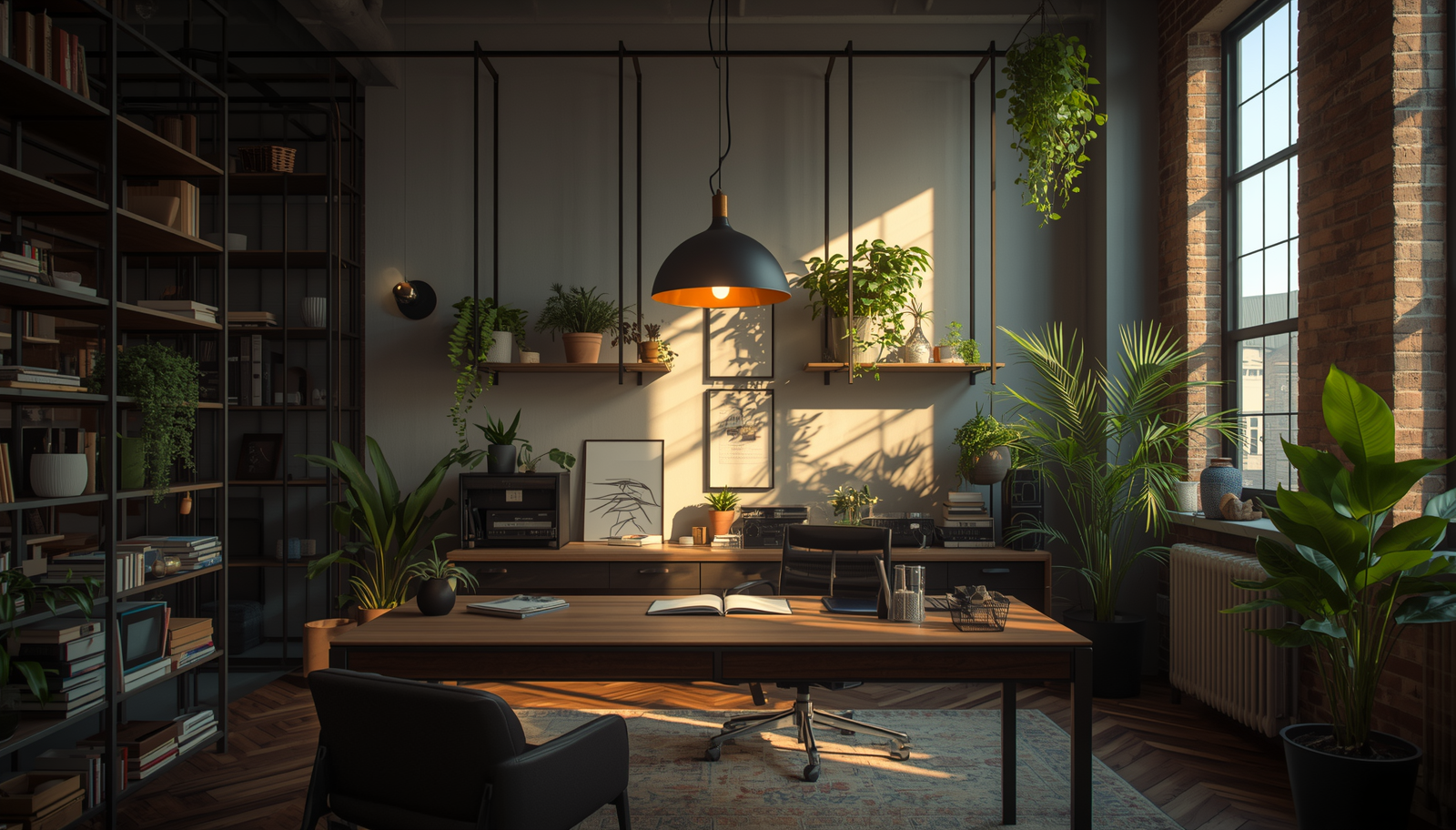
Explore 6 loft home office design ideas that turn high ceilings into functional, warm, and visually balanced workspaces using smart lighting, vertical storage, and natural texture layering.
The chair squeaked again while I looked up and thought why does this room feel like it is swallowing me. The desk was fine. The laptop worked. But the space above my head felt empty in a way that made the whole setup feel unfinished and oddly distracting.
Most people do not talk about this part of working from home. High ceilings look beautiful in photos, but real life? You sit down to work and suddenly the room feels too tall, too open, and a little disconnected. Like your brain is trying to focus while floating in a warehouse.
That is where smart loft planning comes in. These 6 loft home office design ideas to maximize your high ceiling focus on making tall spaces feel grounded, functional, and actually enjoyable to work in every day.

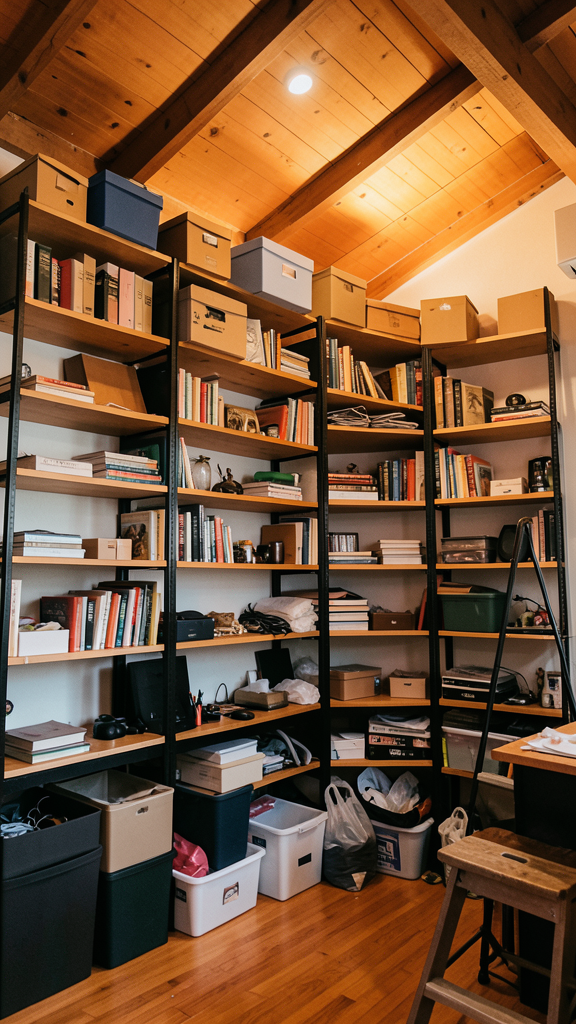
High ceilings without vertical storage is basically wasted potential. It looks impressive but does nothing for your workflow.
I learned this the hard way when my first loft office had beautiful empty walls and zero organization. Everything ended up on the desk. Then the desk became a storage unit. Then productivity disappeared.
The trick is to pull the eye upward but still keep daily essentials within reach. Otherwise you will spend half your day climbing furniture like an unqualified librarian.
FYI, tall shelves also make small lofts feel more intentional instead of empty.
Takeaway: Vertical storage turns unused height into functional workspace power.

Loft ceilings love drama. But not the stressful kind. Lighting is what connects the floor to the ceiling visually, and most people completely underestimate it.
I used to rely on a single desk lamp. The result was a workspace that felt like a spotlight interrogation scene.
The goal is simple. You want the room to feel like it has levels instead of one bright flat surface.
Soft warm lighting also reduces that cold echo effect tall rooms sometimes have.
Takeaway: Layered lighting makes high ceilings feel balanced instead of empty.
If your loft allows structural changes, adding a mezzanine level completely changes how you use the space.
This is the closest thing to gaining extra square footage without moving house.
I once worked in a loft where the desk sat under a raised platform sleeping area. It felt like two different rooms stacked together in the best possible way.
The biggest benefit is psychological separation. Your brain stops mixing work and rest because the space physically defines it.
That alone reduces mental clutter more than most productivity hacks.
Takeaway: Mezzanine layouts split function vertically for better focus and balance.
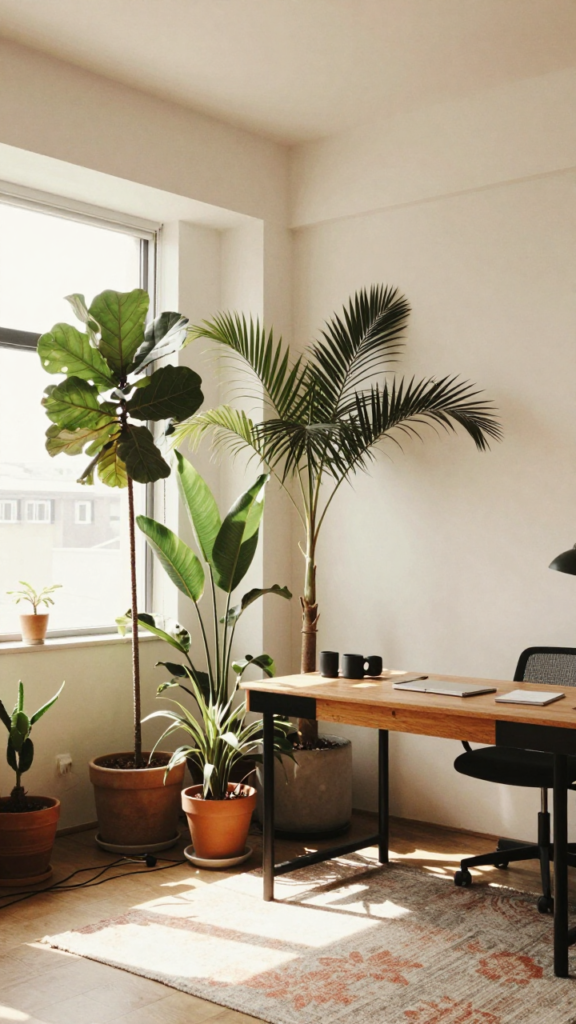
Empty loft walls can feel intimidating. Plants fix that problem without making the space feel crowded.
Not the tiny desk plants that you forget to water for two weeks. I am talking about tall, structural plants that actually use vertical space.
Plants soften tall walls and add life to areas that would otherwise feel like unfinished architecture.
Also, they quietly improve air quality, which helps when you spend hours staring at code or spreadsheets.
IMO, they are one of the easiest upgrades with the biggest visual payoff.
Takeaway: Tall plants make loft ceilings feel alive instead of empty.
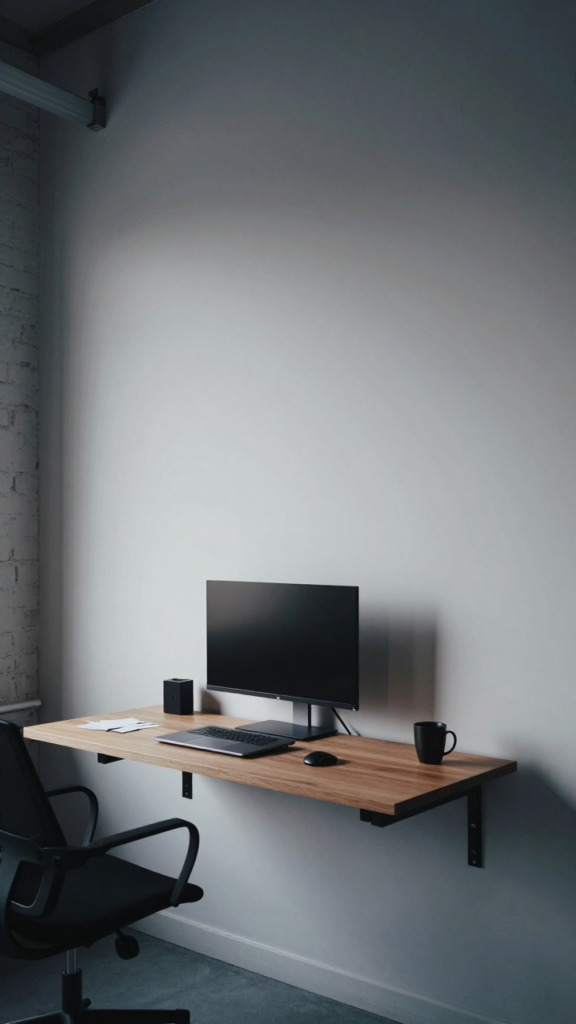
A floating desk setup works incredibly well in high ceiling environments because it emphasizes vertical space instead of fighting it.
The idea is to keep the floor visually open while using the wall as the main structure.
I switched to a floating desk once during a small apartment phase and realized how much visual weight a regular desk actually carries.
Less furniture on the ground instantly makes the room feel bigger and calmer.
And yes, cable management matters here more than ever. Visible cables ruin the illusion fast.
Takeaway: Floating desks create visual space and highlight vertical architecture.
High ceilings often come with echo problems. Sound bounces, conversations feel distant, and Zoom calls suddenly sound like you are in a gymnasium.
Not exactly the vibe for focused work.
I ignored this for too long until a client asked why my voice sounded like it was recorded inside a cave. Not my proudest moment.
Textures matter more than people expect. A mix of wood, fabric, and soft materials helps break up sound reflection and makes the room feel warmer overall.
Also, rugs are underrated. They quietly fix half the acoustic issues without looking technical.
Takeaway: Soft textures reduce echo and make loft offices feel grounded and comfortable.
High ceilings are powerful, but they can easily overpower a workspace if you do not balance them properly.
The goal is not to fill every inch of space. That usually leads to visual chaos. The goal is to create structure that guides your attention naturally.
When I finally stopped treating my loft like a giant empty box and started layering it with storage, lighting, and texture, everything changed. Work felt calmer. Focus lasted longer. Even the space felt more personal.
And honestly, that matters more than any expensive desk setup you can buy.
These 6 loft home office design ideas to maximize your high ceiling are not about decorating for show. They are about making tall, open spaces feel usable and grounded for everyday work.
Start small if you need to. Add lighting first. Then vertical storage. Then texture. You do not need a full renovation to feel the difference.
At the end of the day, a good loft office should not feel like you are working inside an empty hall. It should feel like a space that quietly supports you while you get things done without making everything feel harder than it needs to be.