Physical Address
304 North Cardinal St.
Dorchester Center, MA 02124
Physical Address
304 North Cardinal St.
Dorchester Center, MA 02124

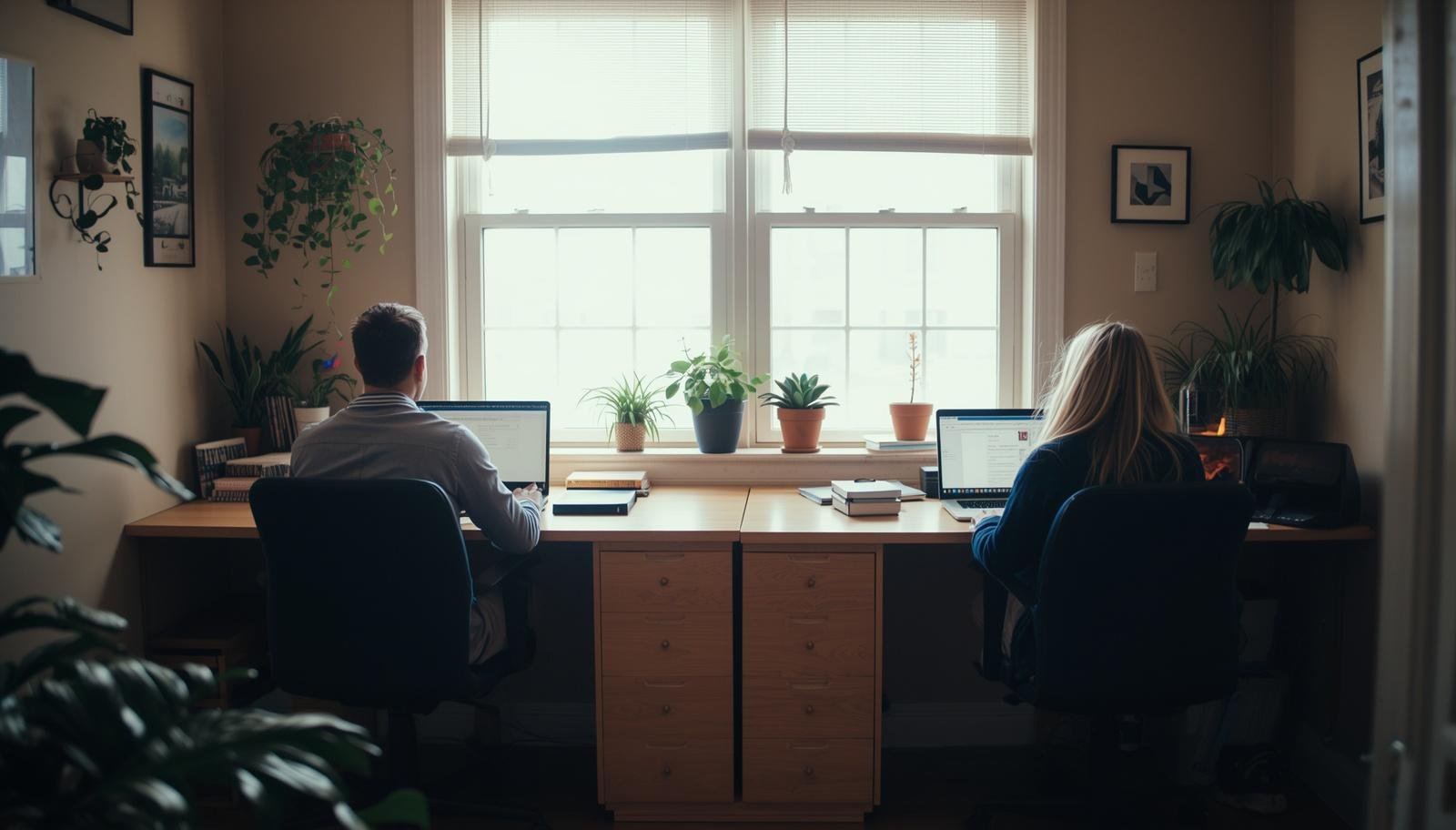
Working from home together can feel chaotic or surprisingly calm, and the right shared office setup can turn daily tension into a more balanced and even enjoyable routine.
The WiFi drops right when both of you are on calls. One of you sighs. The other one glares. The desk feels too small, the chairs keep bumping, and suddenly working from home together feels less cute and more like a silent competition for space.
That was us on a random Wednesday. My husband had a client call, I had a deadline, and our daughter decided that exact moment was perfect for snack negotiations. We were sharing one desk and zero patience.
Working together at home sounds romantic until it is not. But with the right setup, it can actually feel calm, supportive, and yes, even a little sweet.
Let’s talk about how to make that happen.
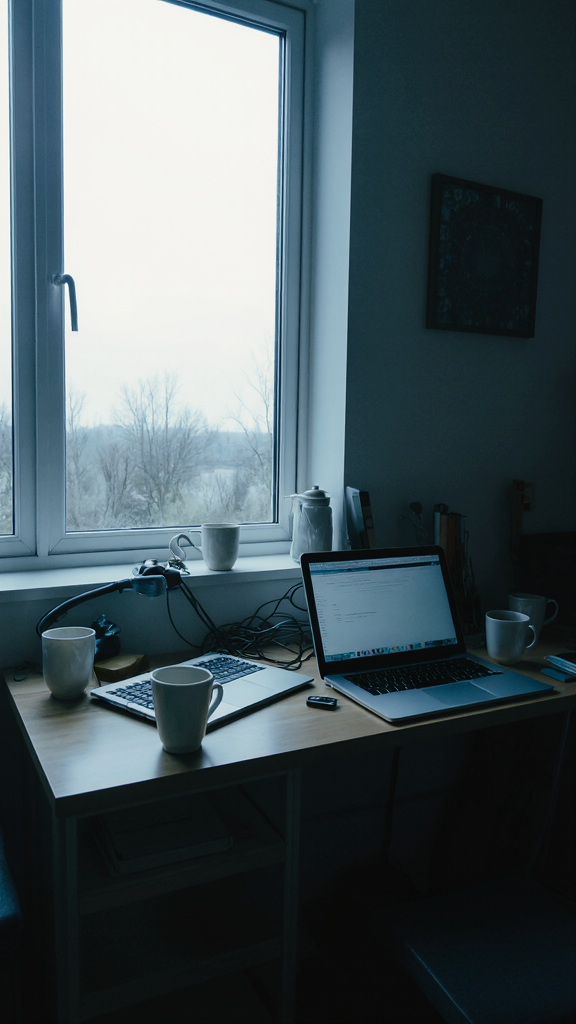
Sharing a workspace is not just about fitting two chairs into one room. It is about energy, boundaries, and not secretly resenting each other by 3 PM.
When your layout works, you feel like a team. When it does not, every small thing becomes annoying.
Takeaway: A good shared office should reduce friction, not create it.

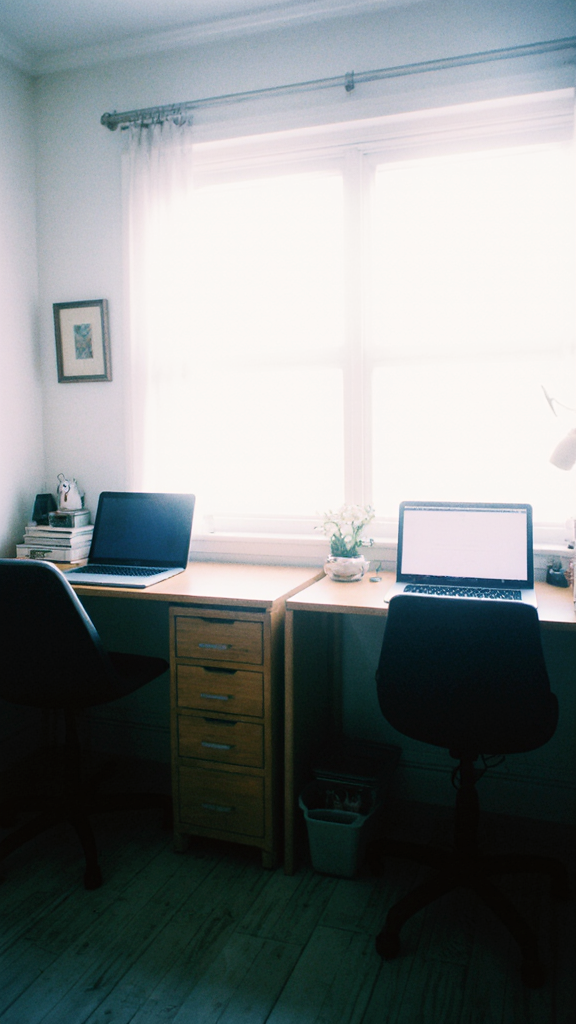
This is the classic. Two desks or one long desk, both facing the same direction.
It looks simple, but it works when done right.
We tried this after giving up on sharing one tiny desk. Suddenly, we stopped bumping elbows every five minutes 🙂
Takeaway: Shared direction creates shared focus without constant interaction.
This one feels more intimate. You sit across from each other, like a mini meeting table at home.
It can be great or a total distraction, depending on your personalities.
We tried this during a slower work season. It felt nice at first. Then we realized we made way too much eye contact during serious work. Not ideal when you are trying to write emails.
Takeaway: Face-to-face works for connection, not deep focus.
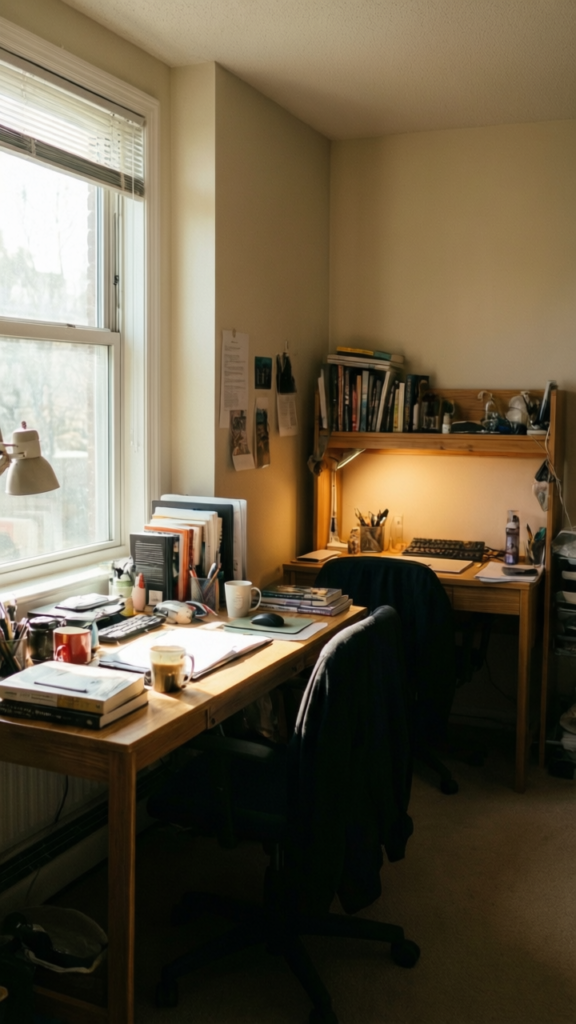
This is where things started to improve for us.
Instead of forcing one shared area, we created two clear zones in the same room.
Zone 1: Focus Area
Zone 2: Flexible Area
We placed my desk near the window and his closer to the wall. Same room, different vibes.
IMO, this setup saved our workdays. We still felt close, just not on top of each other.
Takeaway: Separate zones create harmony without separation.
This one sounds a bit cold, but hear me out.
You sit back-to-back or in opposite directions. No eye contact, no distractions, just work.
We switched to this during a busy month. It felt like we were in our own little worlds, which was exactly what we needed.
It is not the most romantic setup. But it keeps the peace, and honestly that counts.
Takeaway: Sometimes the best way to work together is to not look at each other.

Not everyone has a spare room. Sometimes you are working from a bedroom corner or even the living room.
We have been there.
At one point, we worked from opposite ends of the dining table while our daughter colored in the middle. Was it ideal? No. Did it work? Somehow, yes :/
Takeaway: Small spaces can still work if you stay intentional.
This is where romance actually shows up.
Not in candles and fairy lights everywhere, but in thoughtful details that make both of you feel good.
We added a small plant, better chairs, and matching desk organizers. Nothing fancy. But the space felt more like ours.
FYI, a space you both like reduces random irritation more than you expect.
Takeaway: A little effort in aesthetics goes a long way in shared spaces.
Even good setups fail if you ignore daily habits.
We learned this the hard way. I like quiet. He likes background noise. That alone caused more tension than any layout issue.
Takeaway: Communication matters as much as layout.
You are not just designing a workspace. You are designing a shared routine.
Ask each other:
Test one setup for a week. Then adjust.
No setup works forever. Life changes, work changes, kids interrupt everything.
Takeaway: The best setup is the one you both agree on and keep adjusting.
A romantic and practical home office for two is not about perfection. It is about making daily work feel easier and less stressful together.
You will still have noisy days. You will still get interrupted. That is real life.
But the right setup removes the unnecessary tension. It gives both of you space to focus and room to breathe.
Try one idea from this list this week. Move a desk. Shift a chair. Talk about what is not working.
Because working side by side should feel like a partnership, not a daily test of patience.