Physical Address
304 North Cardinal St.
Dorchester Center, MA 02124
Physical Address
304 North Cardinal St.
Dorchester Center, MA 02124

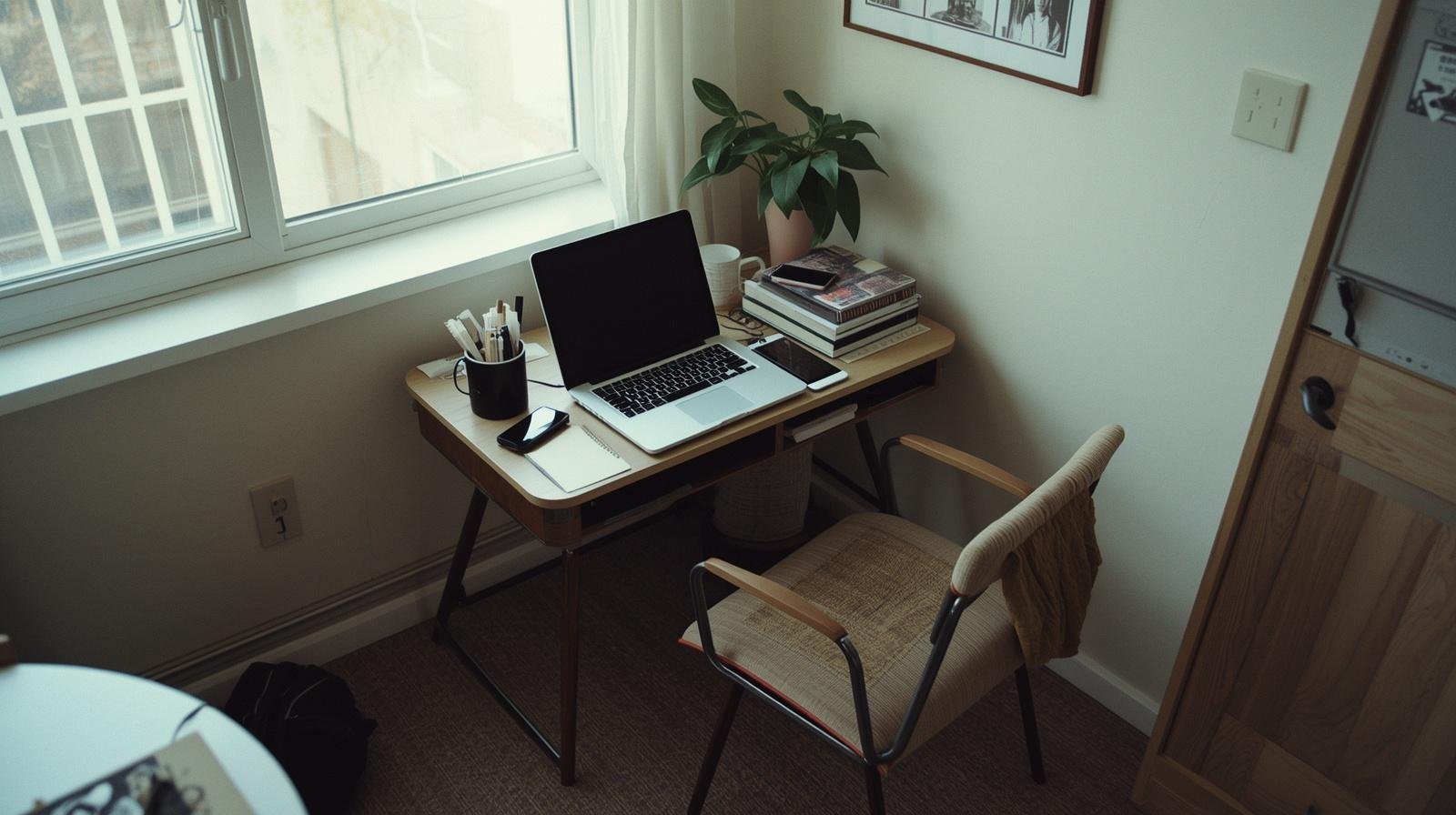
A small space does not have to mean daily back pain, here are 12 realistic ergonomic home office setup ideas that actually work in real, slightly messy homes.
The laptop is balanced on one knee. Your back is doing something questionable. The coffee table suddenly feels like a terrible life decision. And somehow you are expected to focus like this for hours.
That was me, trying to work while my daughter built a Lego empire two feet away. Small space problems are real. But here is the thing. You do not need a big office to feel comfortable and productive. You just need a smarter setup.
Let me show you what actually worked in my tiny, slightly chaotic home.
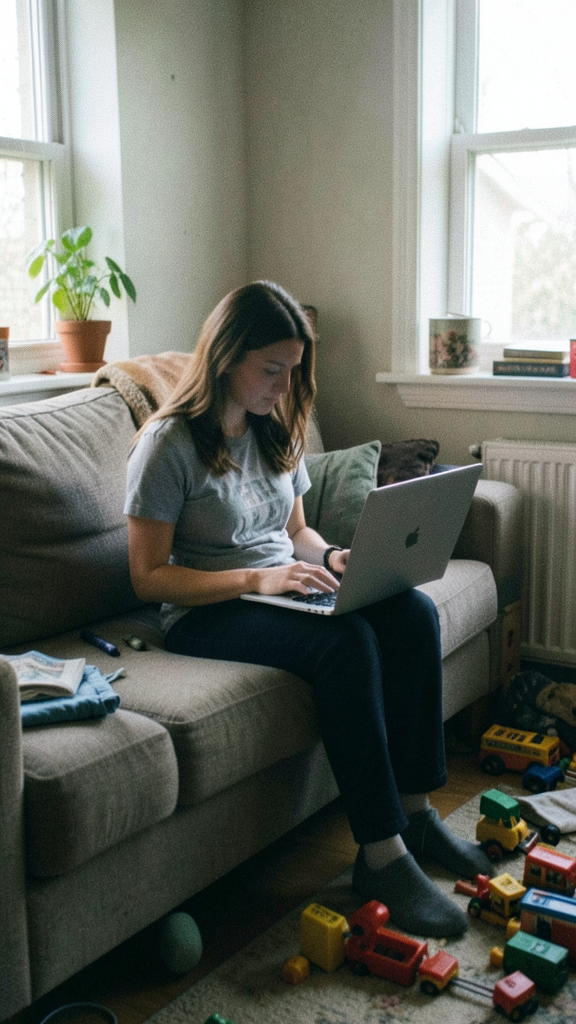
I tried working from a dining chair for months. My back still brings it up like a toxic ex.
You do not need an expensive ergonomic chair. You just need one that supports your lower back and lets your feet rest flat on the floor.
What to look for
If you cannot buy a new chair, roll up a towel and place it behind your lower back. Not glamorous, but it works.
Takeaway: Your chair matters more than your desk. Fix this first.
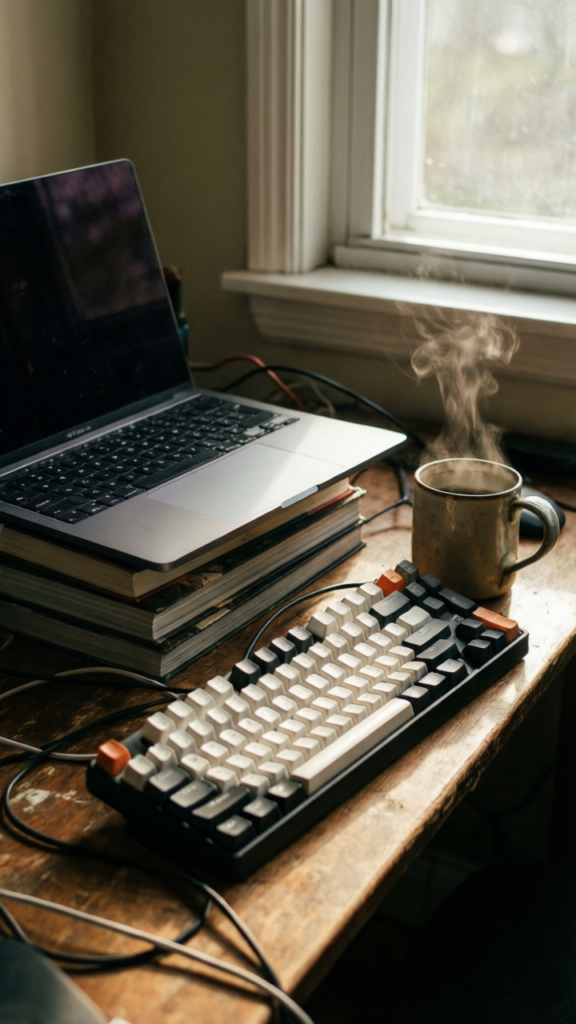
Looking down at your screen all day is basically asking for neck pain.
I used a stack of cookbooks at first. It looked ridiculous but my neck stopped complaining within a week.
Your screen should sit at eye level. That is the goal.
Options
Pair it with an external keyboard if possible.
Takeaway: Eye-level screens reduce neck strain fast. Cheap fixes still count.
Big desks are nice until they take over your entire room.
In small spaces, go for something narrow and functional. Mine sits against a wall and doubles as a place to fold laundry. Not ideal, but real life is messy.
Look for
Wall-mounted desks are also great if you are really tight on space.
Takeaway: Choose a desk that fits your space, not your Pinterest dreams.
If your shoulders creep up while typing, your setup is off.
Your elbows should sit at about a 90-degree angle. Your wrists should feel neutral, not bent.
Quick fixes
I ignored this for way too long. My wrists were not impressed :/
Takeaway: Comfortable arms equal longer, pain-free work sessions.
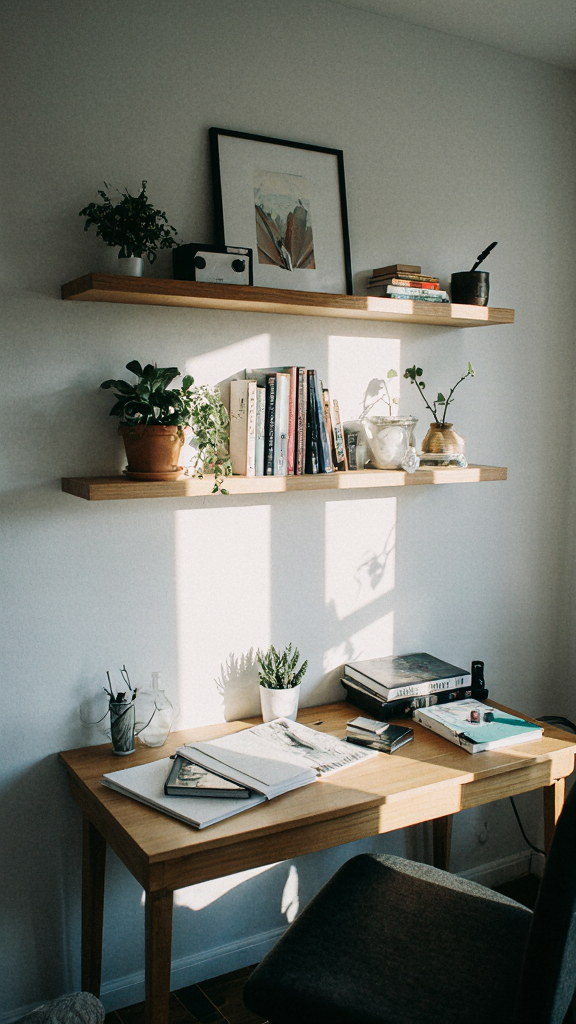
When floor space is limited, go up.
Wall shelves saved me. I store notebooks, chargers, and random things my daughter sneaks onto my desk.
Ideas
It keeps your desk clear and your brain calmer.
Takeaway: A clutter-free desk starts with smart vertical storage.
Working in dim lighting feels cozy until your eyes start burning.
Natural light is best. Place your desk near a window if you can.
If not, use a desk lamp with soft white light.
Tips
Your eyes will thank you. So will your mood.
Takeaway: Good lighting boosts comfort and focus more than you think.
If you have to stand up every five minutes, your flow is gone.
I keep my essentials close. Notebook, pen, water, snacks. Yes, snacks are essential.
Organize your space so you can reach what you need without twisting or stretching.
Try
Takeaway: Less reaching means less strain and better focus.
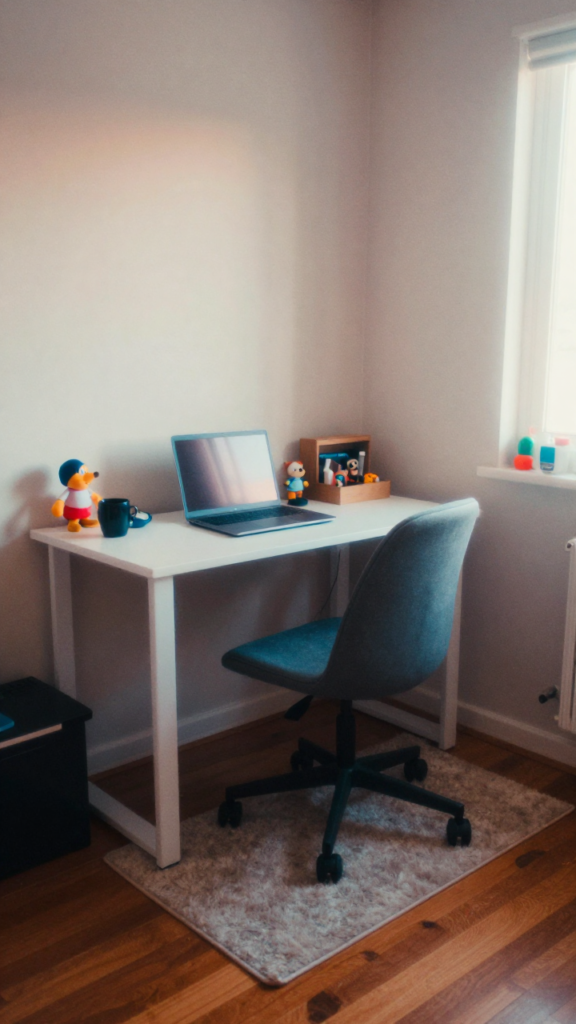
Working from your bed sounds fun until it is not.
Your brain needs boundaries. Even a small corner can become your work zone.
What helped me
It signals your brain that it is time to work. And later, time to stop.
Takeaway: A defined space improves focus and work-life balance.
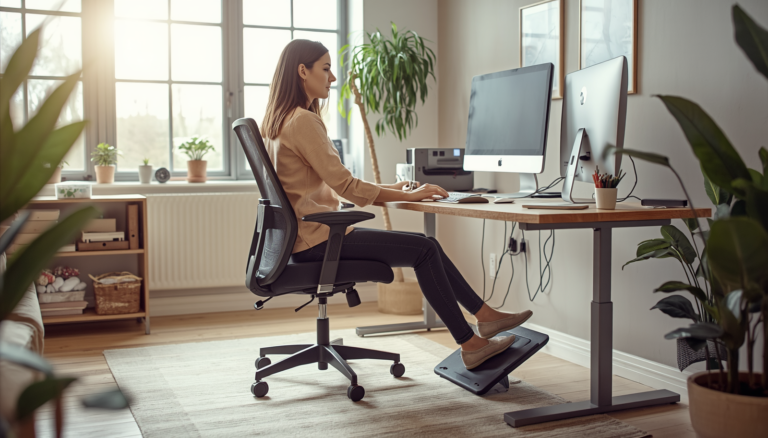
If your feet dangle, your posture suffers.
I used a random storage box as a footrest. Again, not pretty but very effective.
Your feet should sit flat and supported.
Options
Takeaway: Stable feet help your whole body stay aligned.
Cables everywhere make your space feel smaller and more stressful.
I used to ignore this until my daughter almost turned my workspace into a jump rope station.
Simple fixes
It looks cleaner and feels calmer.
Takeaway: Less cable mess equals less mental clutter.
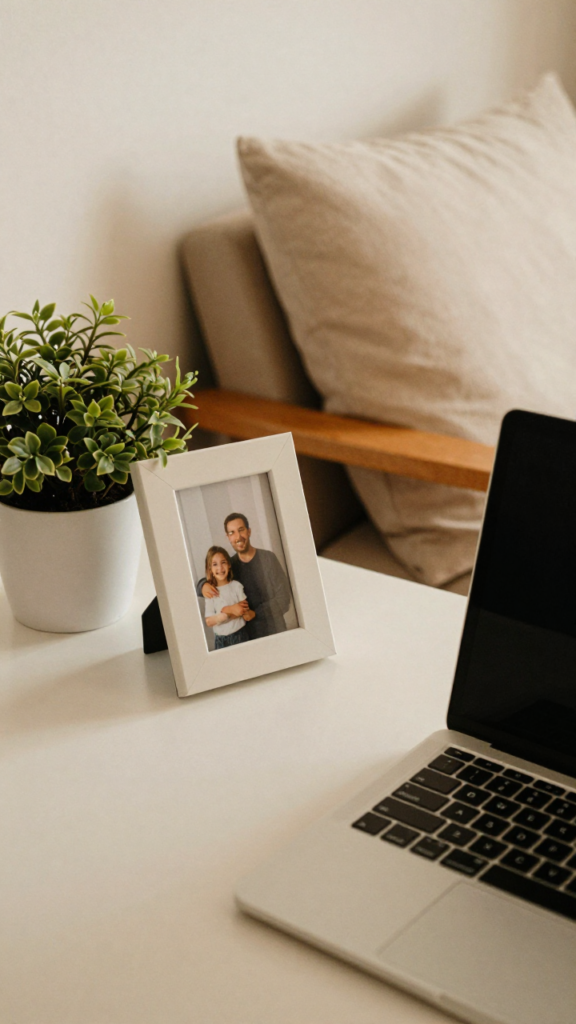
Your workspace should not feel like punishment.
I added a small plant and a photo of my family. Nothing fancy, but it makes me smile.
Ideas
It helps you actually enjoy sitting down to work. Crazy concept, right 🙂
Takeaway: Comfort boosts consistency. You will actually want to work there.
Even the best ergonomic home office setup cannot fix sitting all day.
Set a timer. Stand up. Stretch. Walk around.
I used to skip this until my body forced me to stop.
Easy habits
Takeaway: Movement is part of ergonomics, not optional.
Here is the truth. You do not need perfection. You need a setup that works for your real life.
My home office shares space with toys, laundry, and sometimes snack crumbs. But it supports my body and helps me get things done.
If you are building your own ergonomic home office setup for small spaces, start small.
Focus on
Everything else can evolve over time.
A small space does not mean small comfort. It just means you have to be more intentional.
You deserve to work without constant aches and distractions. And no, you do not need a full room makeover to get there.
Start with one change today. Adjust your chair. Raise your screen. Clear your desk.
Then notice how much better you feel.