Physical Address
304 North Cardinal St.
Dorchester Center, MA 02124
Physical Address
304 North Cardinal St.
Dorchester Center, MA 02124

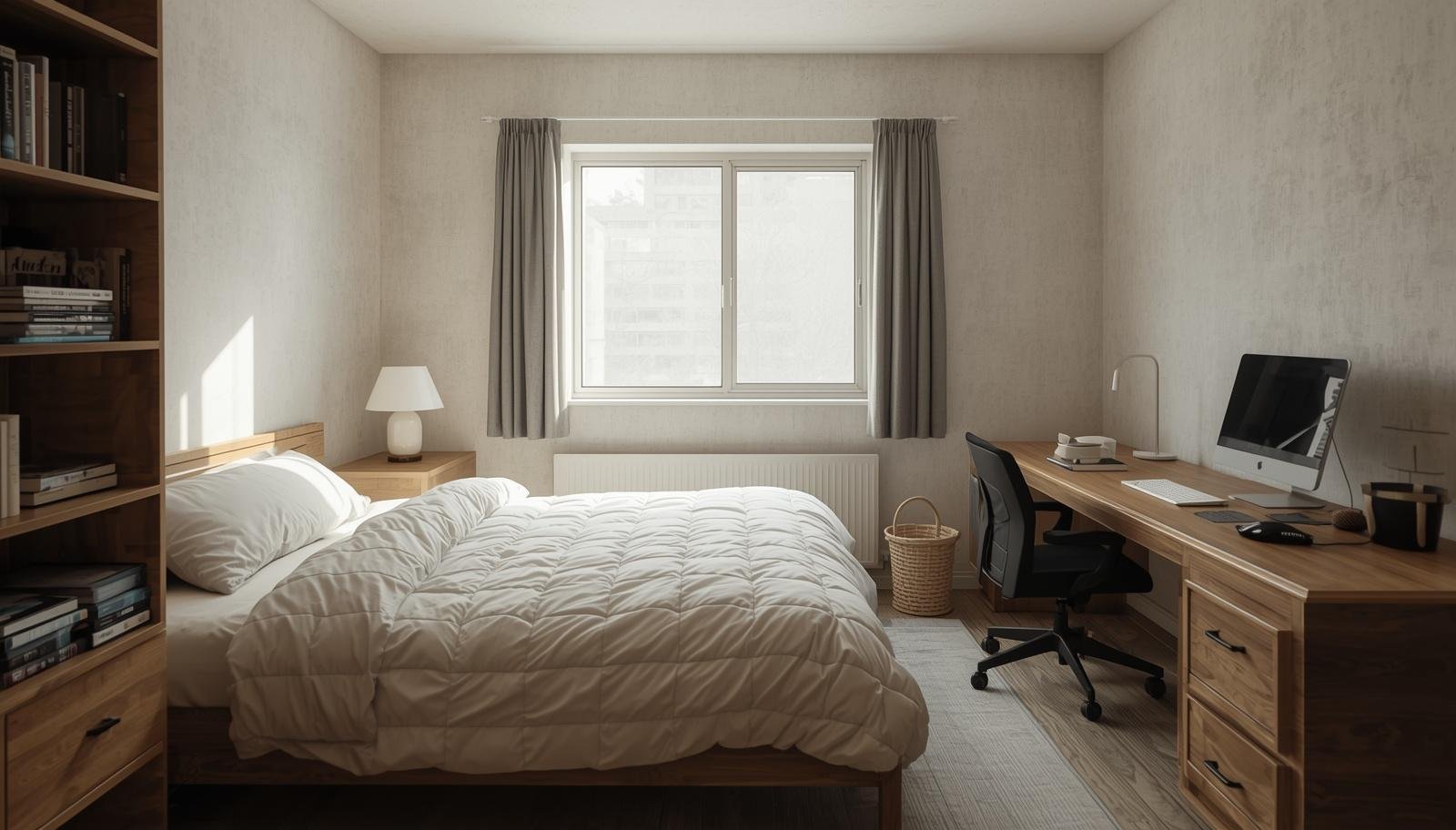
A small 10x10 bedroom office works best when you stop trying to fit everything in and start arranging only what actually makes your day easier.
The chair barely slides back. Your knees hit the bed frame. The desk feels too close, but somehow also too far from everything you need. You try to focus, but the space keeps reminding you it was never meant to be an office.
That’s the reality for most of us working out of a bedroom. A 10×10 room sounds fine until you split it between sleep and work. Then it turns into a quiet battle for space.
I’ve rearranged my own room more times than I want to admit. Some layouts looked good for a day and then annoyed me by week two. The ones below stuck. Not perfect, but they made daily work feel easier.
These are 5 efficient 10×10 office layout ideas for small bedrooms that actually work in real life.


This was the first layout that didn’t drive me crazy.
Instead of fighting the bed, I aligned the desk parallel to it. Same direction, clean lines, no awkward angles.
It feels simple, but it reduces visual clutter a lot. Your eyes stop jumping around.
I noticed I could sit down and start working faster. Less adjusting, less thinking.
Takeaway: Keep major furniture aligned to calm the space.

Corners save small rooms. Always.
I pushed my desk into a corner and let the bed take the opposite side. It created two clear zones without needing extra space.
Add a small shelf above and you get storage without spreading out.
At first it felt tight. Then it felt focused. Big difference.
Takeaway: Corners turn tight rooms into usable zones.

This one depends on your window placement. If you have one, use it.
I placed the desk near the window and shifted the bed slightly away. Not perfectly centered. Slightly off.
It changed my energy during the day. I didn’t feel stuck in the same mood all the time.
Also, working with sunlight just feels better. No surprise there 🙂
Takeaway: Give your desk the light and your bed the quiet.
This is the one I resisted the most.
A single wall handles everything. Desk, storage, small decor. The rest of the room stays open.
The first few days feel empty. Then it starts to feel clear.
You stop losing things. You stop shifting items around. Work becomes more direct.
IMO, this is the cleanest option if you can stick to it.
Takeaway: One strong wall beats scattered furniture.

This one came from real life, not design ideas.
Working in a bedroom means things change. You get tired. You want to move. Sometimes you just need a different spot.
So I built flexibility into the layout.
Sometimes I work at the desk. Sometimes I sit by the bed with a notebook. It keeps things from feeling stuck.
And yes, it also helps when my daughter walks in and takes over part of the room for five minutes :/
Takeaway: Flexibility matters more than perfect positioning.
The layout is only half the story. The small details decide if it actually works.
These sound obvious. They still make the biggest difference.
I ignored them at first and kept blaming the room size. Turns out, it was my setup.
Takeaway: Small adjustments fix most layout problems.
You don’t need more ideas. You need to avoid the wrong ones.
I’ve done all of these. None of them lasted.
The room ends up feeling chaotic even when it’s technically organized.
Takeaway: Bad layout choices add stress you don’t notice right away.
A 10×10 bedroom office will never feel huge. That’s fine.
It just needs to feel usable.
Here’s what actually matters:
Once I focused on these, the space stopped fighting me. I didn’t need more room. I needed fewer bad decisions.
Your room doesn’t need to change size. Your layout does.
Pick one idea from this list and try it today. Move the desk. Shift the bed. Clear one surface.
Then sit down and see how it feels. That moment tells you everything.