Physical Address
304 North Cardinal St.
Dorchester Center, MA 02124
Physical Address
304 North Cardinal St.
Dorchester Center, MA 02124

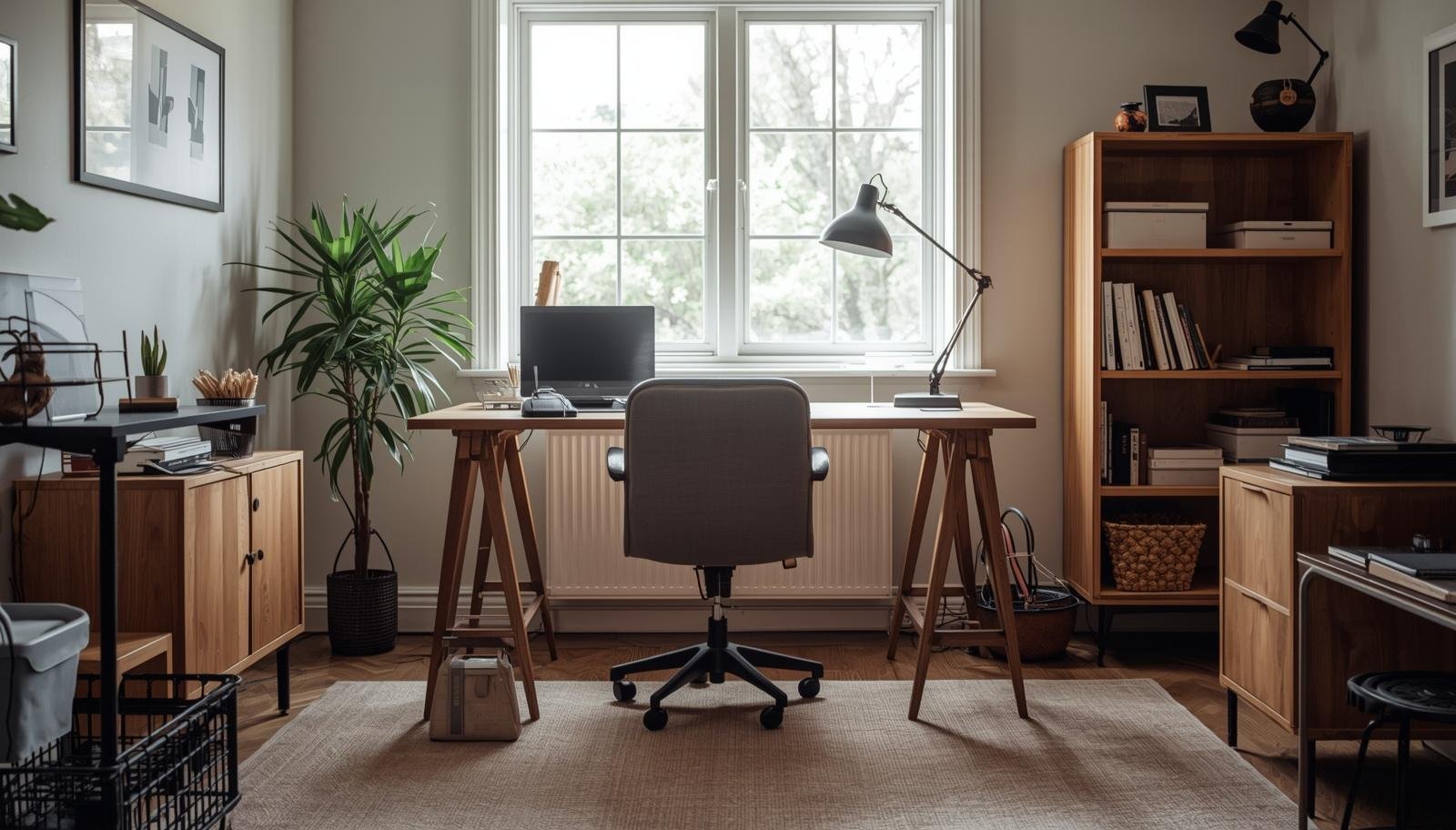
A well-arranged home office is not about having better furniture, but about placing what you already have in a way that finally works with you instead of against you.
The desk is in place. The chair looks decent. You sit down, adjust a few things, and somehow nothing feels right. Your arm hits the edge. The light feels off. You shift again, then again.
At some point, you stop noticing how uncomfortable it is. You just work around it.
Most people don’t have a furniture problem. They have an arrangement problem.
These are 9 pro tips for the perfect home office furniture arrangement that actually make your space easier to use every single day.

This sounds backward, but it works.
Before you move anything, stand in your space and walk through it. Where do you turn? Where do you pause? Where do things feel tight?
You will notice awkward spots fast.
I ignored this step before and kept rearranging randomly. It never worked.
Takeaway: Your movement should guide your furniture, not the other way around.

Everything revolves around the desk.
If the desk placement feels wrong, the whole room feels off. I moved mine at least five times before getting it right.
Once the desk feels right, everything else becomes easier.
Takeaway: A well-placed desk sets the tone for the entire room.
Most people forget this.
The chair needs space to move. Not just to sit, but to shift, roll, and adjust.
I used to push my chair into a tight spot. It worked for about ten minutes 🙂
Takeaway: Comfort comes from space, not just the chair itself.

If your desk is cluttered, your walls are probably empty.
I avoided wall storage for a long time. Then I added a few shelves and everything changed.
It frees your desk without adding bulk.
Takeaway: Walls carry the load so your desk does not have to.

Even in a small room, zones help.
I used to do everything at one spot. Work, planning, random scrolling. It blurred together.
It gives your brain a break without leaving the room.
Takeaway: Clear zones reduce mental clutter.
This one hurts a little.
You want everything within reach. But too much on the desk slows you down.
Everything else should go somewhere else.
FYI, that pile of papers you keep moving around is not helping 🙂
Takeaway: A clean desk supports faster thinking.
Lighting is not just about brightness. It is about placement.
I used one overhead light for months. It made everything feel flat and tiring.
The room feels more alive when light comes from different directions.
Takeaway: Good lighting reduces strain and improves mood.
Big furniture looks nice in empty rooms. Not so much in real life.
I once bought a desk that looked great online. It took over the entire space.
The room should feel usable, not filled.
Takeaway: Smaller furniture often works better in real homes.

This sounds strange, but it matters.
Not every corner needs something. Empty space gives your room balance.
I fought this idea at first. Then I tried it and never went back :/
Takeaway: Empty space is part of good design, not wasted space.
You don’t need to replace everything. Most of the time, small shifts are enough.
Then sit down and notice how it feels.
Small changes reveal what actually works.
Takeaway: You can improve your setup without buying anything new.
These are easy to miss. They add up over time.
I made all of these mistakes. They felt fine at first.
Then they slowly made work harder.
Takeaway: Poor arrangement creates constant friction you barely notice.
The perfect home office furniture arrangement is not about style. It is about how the space supports your day.
Here is what matters most:
Once these are in place, everything feels easier.
Your workspace should not slow you down.
It should quietly support you without asking for attention.
Move one piece of furniture today. Just one.
Then sit down and see if your day feels a little lighter.