Physical Address
304 North Cardinal St.
Dorchester Center, MA 02124
Physical Address
304 North Cardinal St.
Dorchester Center, MA 02124

Smart floor plans, not more space, are what turn a cramped tiny home office into a place where you can actually focus and feel comfortable working.
The laptop barely fits, your elbow keeps hitting the wall, and somehow the chair blocks the door every time you stand up. You adjust things for the tenth time and still feel annoyed before work even starts. That was my reality when I tried to squeeze a “proper office” into a tiny home setup that clearly had other plans.
Small spaces are tricky, but they are not impossible. You just need a smarter layout, not more square footage. After testing, failing, and rearranging way too often, I found a few floor plans that actually work without making you feel boxed in.
Let’s break down 5 detailed small home office floor plan examples for tiny homes that are practical, cozy, and honestly livable.

People obsess over desks and chairs. I did too. Then I realized the layout matters way more.
A good floor plan:
When the layout works, everything else feels easier. When it does not, even the nicest desk feels wrong.
Takeaway: Fix your layout first, then worry about furniture.

This is the simplest layout, and yes, it works better than you think.
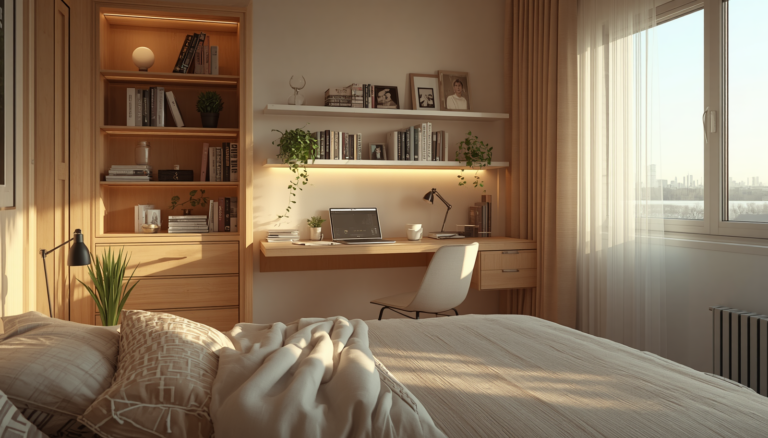
Everything lines up along one wall. Desk, storage, and even decor stay in a straight line.
I switched to this after getting tired of bumping into furniture. Suddenly the room felt bigger without actually being bigger. Funny how that works.
Takeaway: Keep everything on one wall and free up the rest of the room.

Corners are wasted space until you decide they are not.
The desk wraps around the corner, forming an L shape that uses two walls.
I tried this when I needed space for both client work and writing. It felt organized without feeling crowded. Also, it made multitasking easier without juggling piles of stuff.
IMO, this is one of the best layouts if you juggle multiple tasks daily.
Takeaway: Use corners to expand your workspace without expanding your room.

Natural light changes everything. Mood, focus, even patience levels.
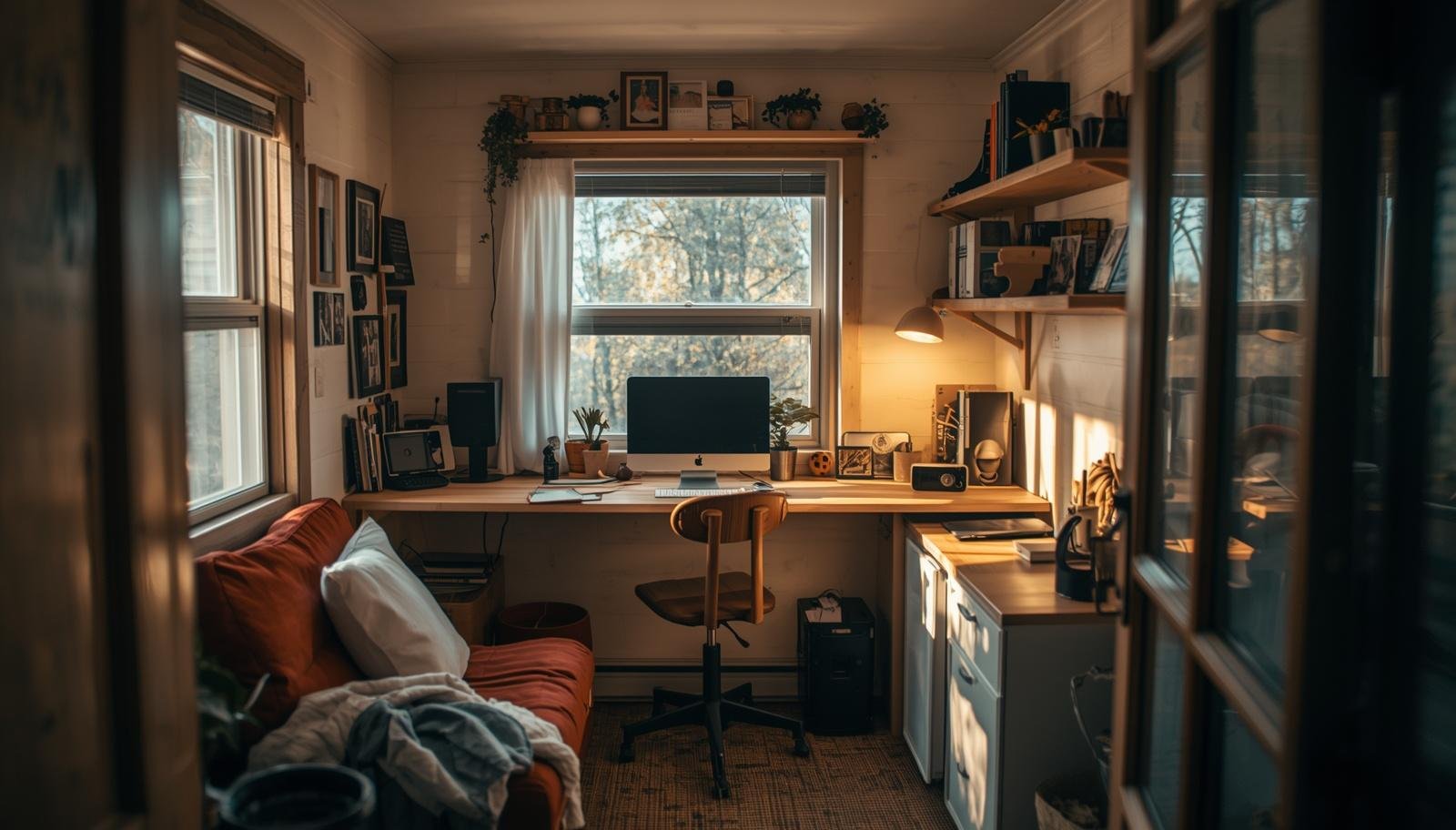
The desk sits directly in front of a window, becoming the focal point of the room.
I moved my desk to the window after a long phase of staring at a blank wall. It felt like upgrading my entire work life without spending money.
Also, your video calls instantly look better. Not life changing, but close 🙂
Takeaway: Face the window and let natural light do half the work.

Working nonstop in one spot gets draining fast. Your brain needs a break, even in a tiny space.
The room divides into two mini zones. One for work and one for relaxing.
I added a tiny reading chair in my office. My daughter claimed it within a day, so now it doubles as a shared space. Not planned, but it works.
FYI, this layout helps a lot if you tend to stay glued to your desk all day.
Takeaway: Even tiny rooms can support both work and rest.
When floor space disappears, go up. Seriously.
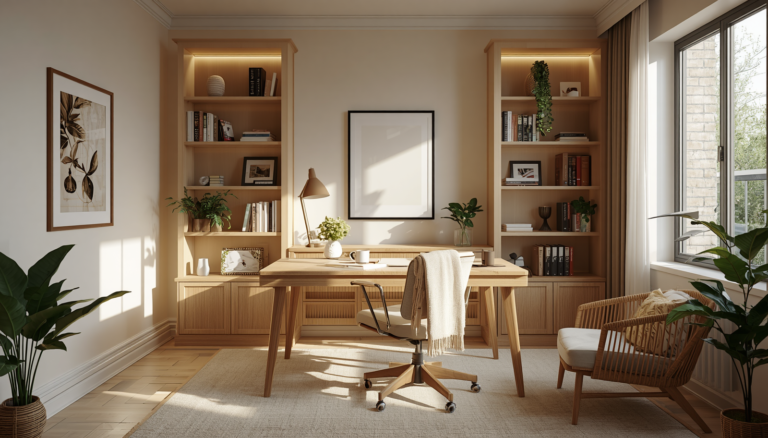
The layout focuses on vertical storage and compact furniture, almost like a mini loft.
I resisted this at first because I thought it would feel cramped. It did not. It actually felt cleaner and more organized.
You stop relying on floor space and start using your walls like they matter.
Takeaway: Use vertical space to reclaim your room.
No matter which layout you choose, these details can make or break your setup.
Big desk in a small room equals instant regret. Choose compact pieces that fit the scale.
Limit what stays on your desk:
Everything else needs a home somewhere else.
Use warm lighting for a cozy feel. Overhead lights alone feel harsh and uninspiring.
Can you stand up without bumping into something? If not, adjust the layout.
Takeaway: Small adjustments can completely change how your office feels.
Let me save you from some frustration.
I once kept an extra side table that served no purpose. It just sat there making the room feel crowded. Removing it felt like instant relief.
Takeaway: If it does not serve a purpose, it should not take up space.
Not every layout works for every person. Be honest about how you work.
Ask yourself:
Your answers will point you toward the right layout.
For example:
Takeaway: Your workflow should guide your layout, not trends.
Creating a functional office in a tiny home is not about squeezing things in and hoping for the best. It is about choosing a layout that supports how you actually live and work.
These 5 detailed small home office floor plan examples for tiny homes are not just ideas. They are real solutions that can turn frustration into something manageable, even enjoyable.
Pick one layout and try it this week. Move things around, test it, adjust it. Yes, it might feel annoying at first, but so does working in a space that never quite feels right.
Because at the end of the day, your workspace should make your life easier, not quietly drive you crazy.