Physical Address
304 North Cardinal St.
Dorchester Center, MA 02124
Physical Address
304 North Cardinal St.
Dorchester Center, MA 02124

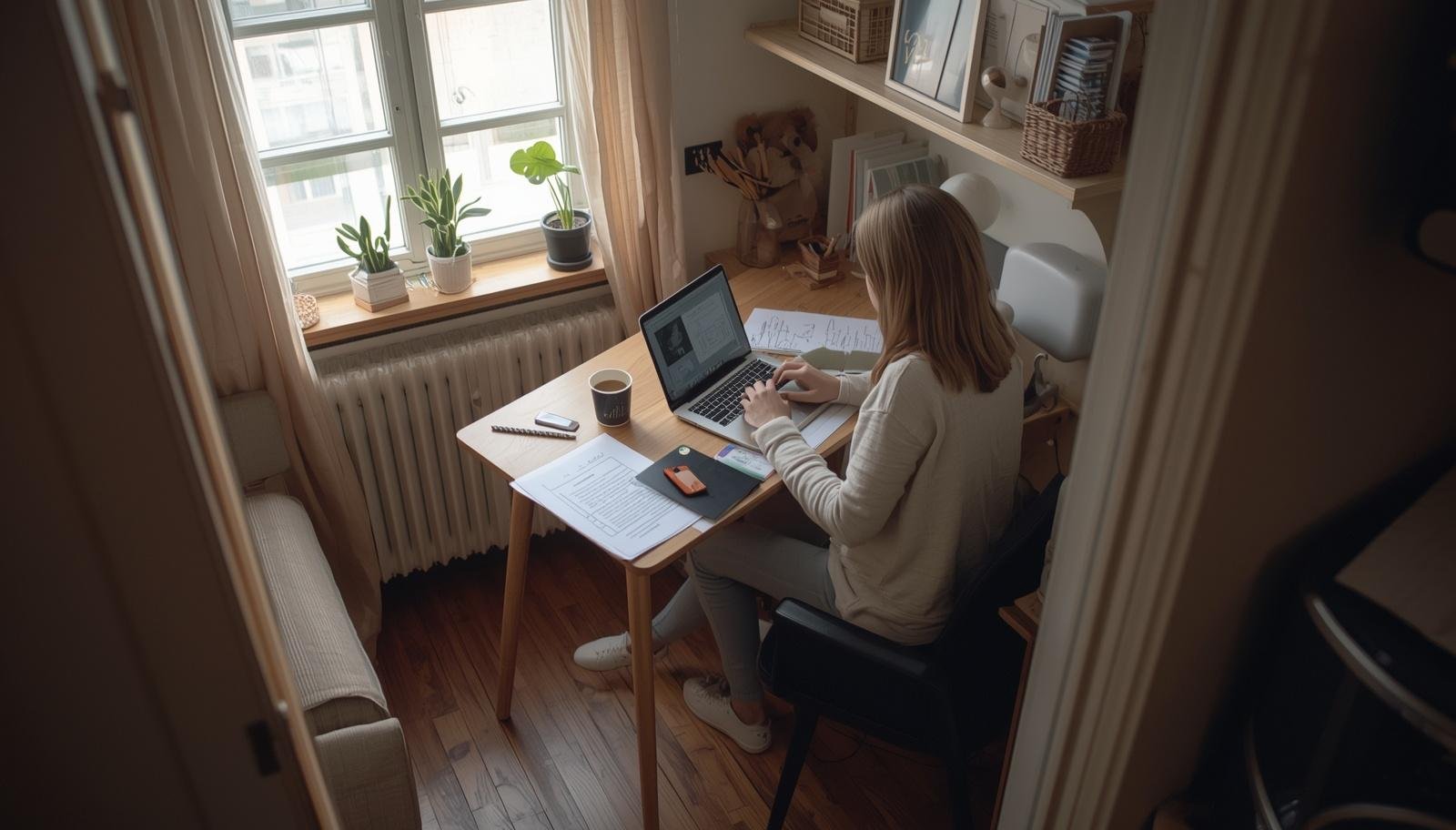
These practical desk setup ideas for small spaces will help you create a cleaner, more productive workspace without turning your apartment into an overcrowded office nightmare.
My laptop balanced on top of a laundry basket for two straight weeks because I ran out of desk space. The coffee mug sat dangerously close to a pile of invoices. My daughter kept stealing my chair for drawing time, and somehow every charging cable in the house ended up wrapped around my ankle like a tiny trap.
That was the moment I realized a small workspace can wreck your focus faster than social media notifications. You do not need a giant Pinterest office to work well. You just need smarter setup choices that stop your desk from feeling like a storage closet with WiFi.
These desk setup ideas for small spaces genuinely helped me stay productive without turning my apartment into a furniture showroom.
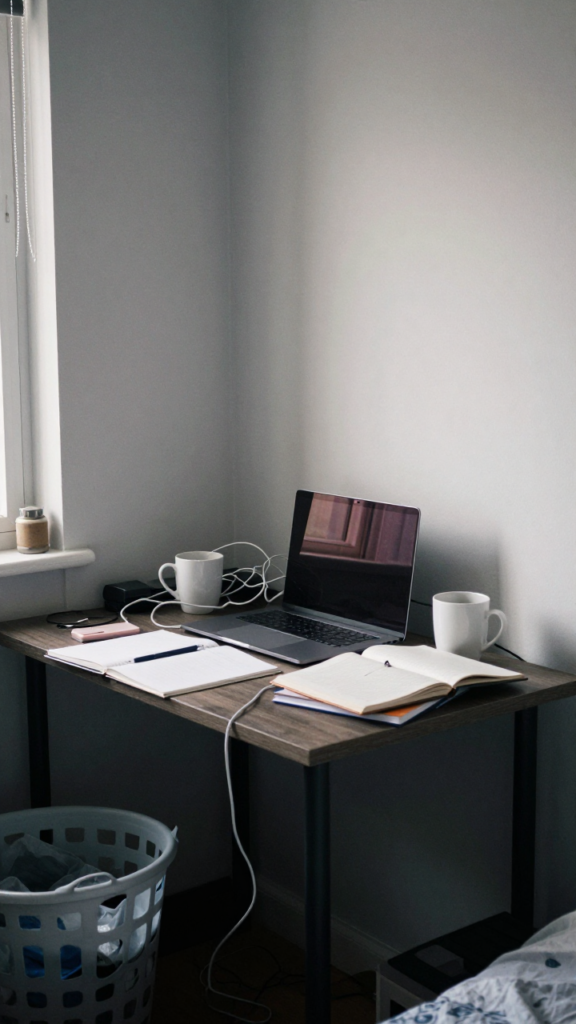
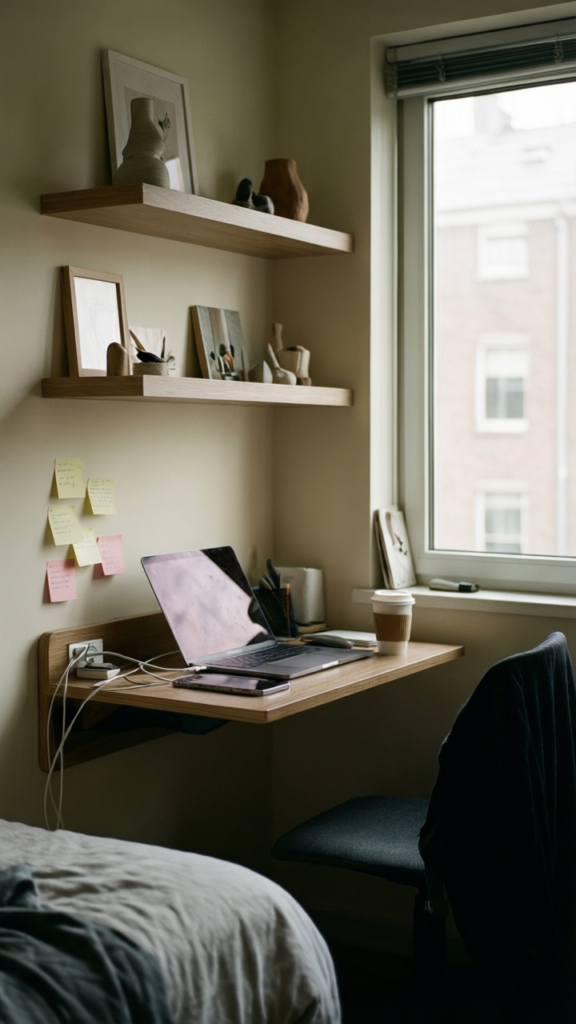
A traditional desk eats space fast. Especially in apartments where every square foot already works overtime.
I swapped my oversized desk for a simple wall mounted version, and honestly, the room finally stopped feeling claustrophobic. My daughter even said the office corner looked less angry. Kids really know how to humble you.
Some fold away when not in use, which feels oddly satisfying 🙂
Takeaway: Wall mounted desks create a functional workspace without overwhelming small rooms.
I used to keep adding tiny drawers and baskets around my desk area. Bad idea. The room slowly started looking like a clearance aisle.
Vertical storage changed everything. Floating shelves gave me space for notebooks, chargers, and random business paperwork without crowding the floor.
Perfect for books, office supplies, and decor.
Great for headphones, cables, and calendars.
They hold more than you think while taking up minimal space.
Takeaway: Vertical storage keeps your desk area organized while preserving valuable floor space.
People online love massive dual-monitor setups. Meanwhile, some of us barely have room for lunch beside the keyboard.
I tried two monitors once and immediately regretted it. My desk looked like an airport control station squeezed into a hallway. Switching back to one quality monitor made the setup cleaner and less stressful.
IMO, a clean desk helps focus more than extra screens ever did.
Takeaway: A simple monitor setup often improves focus and saves space in smaller work areas.
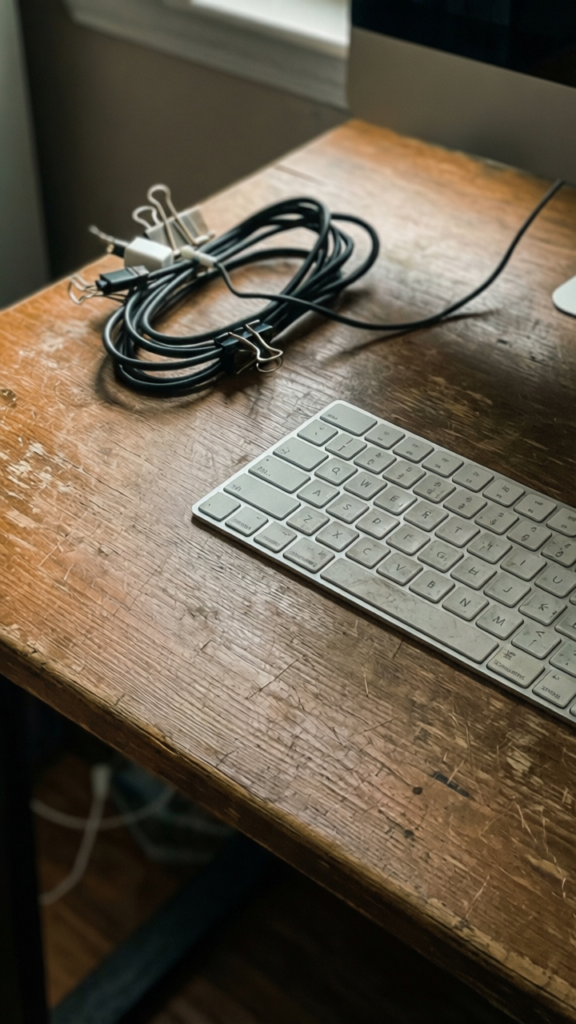
Nothing destroys a clean desk setup faster than cable chaos. One minute your workspace looks decent. The next minute it resembles spaghetti with anxiety issues.
I finally used cable clips and an under-desk tray, and suddenly the whole space felt calmer. Funny how seeing fewer wires makes your brain panic less.
Also, stop keeping mystery chargers from 2014. They are not coming back into your life.
Takeaway: Better cable management instantly makes small desk setups feel cleaner and more productive.
For months I worked beside one dim yellow lamp that made every Zoom call look like a hostage video.
Good lighting matters more than people think. A compact desk lamp with adjustable brightness helped reduce eye strain and made the workspace feel more energizing.
They save surface space and direct light exactly where needed.
These sit neatly above monitors without cluttering the desk.
Place the desk near a window if possible.
Natural light boosts my mood instantly. Bills still exist, obviously, but at least the room feels less depressing.
Takeaway: Proper lighting improves focus, reduces fatigue, and helps small spaces feel more open.
Small rooms demand furniture that actually earns its keep.
I bought a side table with hidden storage that now holds office supplies, notebooks, and my emergency chocolate stash. Nobody in this house touches that drawer if they value peace.
The less furniture you need overall, the more breathable the room feels.
Takeaway: Multi functional furniture reduces clutter while maximizing small workspace efficiency.
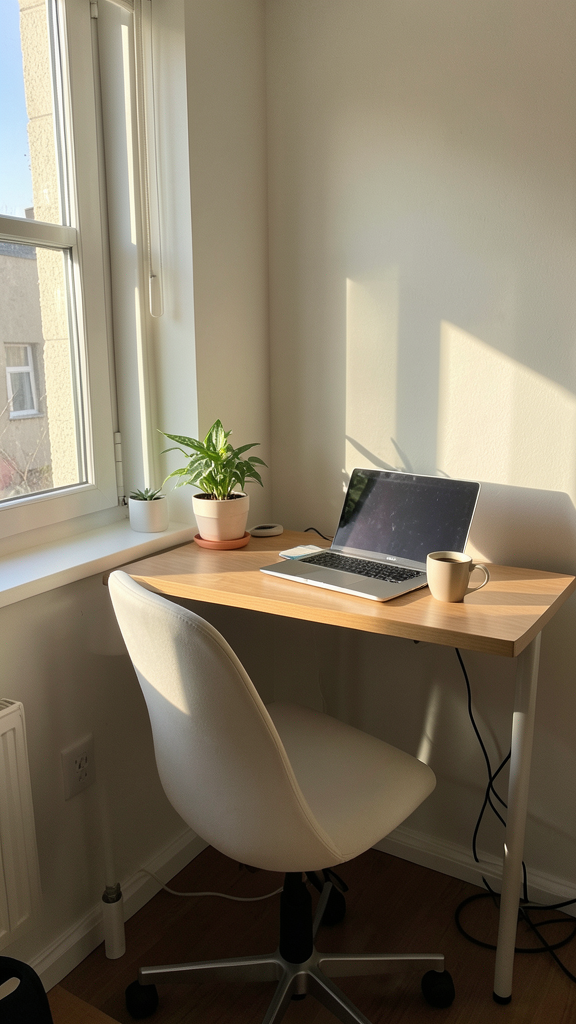
Working from the kitchen table sounds fine until someone leaves cereal crumbs beside your laptop at 8 AM.
You do not need a separate office. You just need visual boundaries. I carved out a small corner in our bedroom using a narrow rug, a desk lamp, and one shelf. Suddenly my brain recognized it as work space instead of random furniture placement.
Tiny zones help your brain switch into work mode faster.
Takeaway: Defined work areas improve concentration even in small shared spaces.
I used to decorate my desk like I was opening a lifestyle boutique. Candles. Planners. Decorative trays. Tiny fake plants collecting dust for sport.
Then I realized clutter quietly drains focus. Now I only keep daily essentials within reach.
Everything else can live somewhere else. Your stapler does not need front-row seating.
Takeaway: Minimal desk surfaces reduce distractions and improve productivity in small spaces.
A giant executive chair looks impressive until it consumes half the room like a leather monster.
I switched to a slimmer ergonomic chair with wheels, and the entire desk area became easier to move around. Plus my back stopped filing daily complaints.
Avoid oversized armrests and bulky designs.
Your shoulders and neck will thank you.
Comfort matters if you sit for long hours.
Do not sacrifice comfort just to save space. Your spine keeps receipts.
Takeaway: The right chair improves posture and keeps compact workspaces functional.
A workspace should feel human, not like a corporate waiting room.
I keep one framed family photo, a tiny plant, and a handwritten note from my daughter near the monitor. That is enough personality without turning the desk into a craft store explosion.
Balance matters. Too much decor creates visual noise fast.
Takeaway: Simple personal details make your workspace feel motivating without adding clutter.
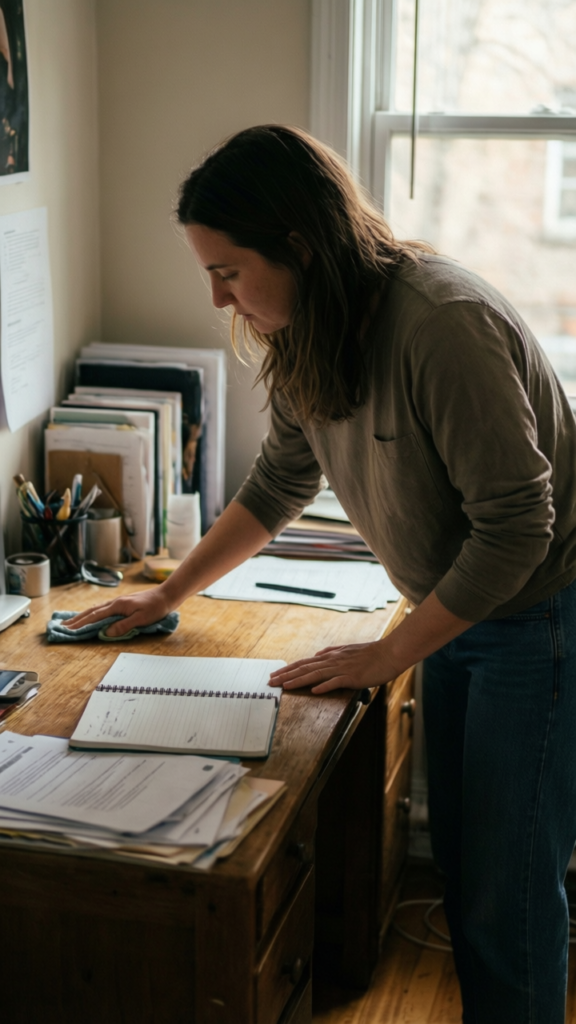
Small spaces get messy ridiculously fast. One bad week and suddenly receipts, sticky notes, and random pens reproduce overnight.
Every Friday afternoon I spend ten minutes resetting the desk. I wipe surfaces, toss trash, organize papers, and return missing coffee mugs to the kitchen before they officially become office decor.
It feels boring while doing it, but Monday mornings become much less painful afterward.
Takeaway: Weekly desk maintenance prevents clutter from taking over small workspaces.
Big offices look nice online, sure. But smaller workspaces often force better habits.
You become more intentional about what stays on your desk. You organize more carefully. You stop collecting useless office junk because there is physically nowhere to hide it.
Honestly, working in a compact space helped me focus better. Less clutter meant fewer distractions. Fewer distractions meant more actual work getting done. Revolutionary concept, apparently.
These desk setup ideas for small spaces to boost productivity are less about aesthetics and more about function. Pretty setups help, but practical layouts matter more when you work long hours from home.
You do not need an enormous home office to feel productive. A small workspace can still feel organized, comfortable, and motivating with the right setup choices.
Start simple. Fix the lighting. Clear the cables. Remove half the stuff currently living on your desk for no reason. Small improvements add up quickly.
At the end of the day, productivity feels easier when your workspace stops fighting you every morning. Honestly, that alone deserves a celebratory coffee refill.