Physical Address
304 North Cardinal St.
Dorchester Center, MA 02124
Physical Address
304 North Cardinal St.
Dorchester Center, MA 02124

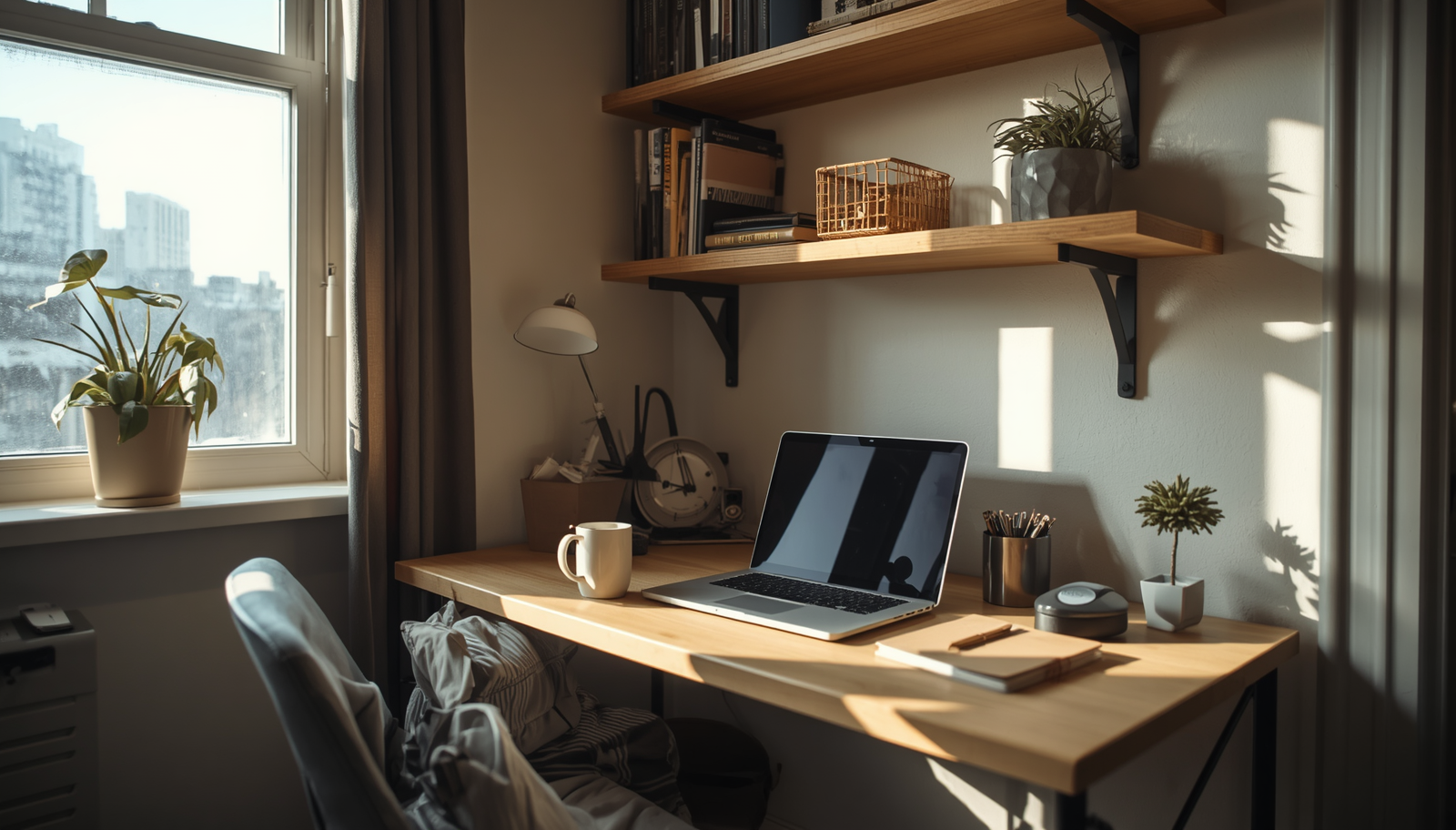
These small home office ideas prove you do not need a huge house to create a workspace that feels productive, comfortable, and genuinely livable.
The laptop was balanced on one side of the dining table. My daughter’s crayons were spread across the other side. A cold cup of coffee sat dangerously close to my keyboard while I answered client emails and tried not to lose my mind over the pile of laundry behind me.
That was my home office for almost two years.
A lot of people picture home offices as beautiful Pinterest rooms with giant windows and custom shelves. Reality looks more like squeezing a desk between the couch and the wall while praying nobody notices the chaos during Zoom calls :/
The good news is you do not need a huge house to create a workspace that feels calm, useful, and surprisingly professional. You just need smarter ideas and a little creativity.
Here are 14 small home office ideas to maximize your limited space without turning your entire home into a sad corporate cubicle.


Corners are underrated. Most people shove random baskets or dead plants there and call it a day.
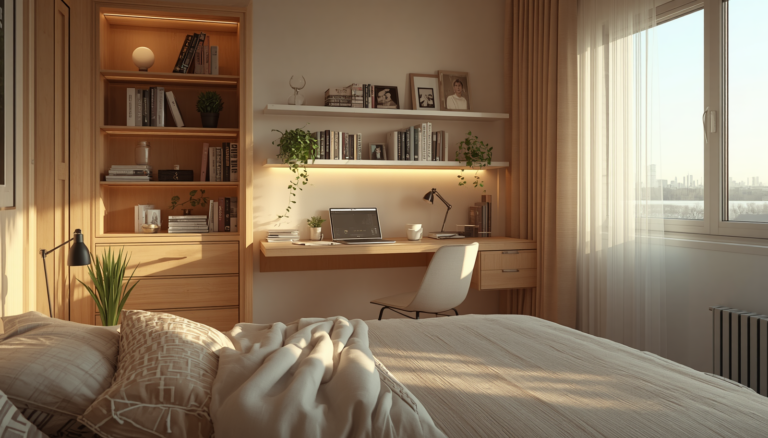
One of the best decisions I made was turning an awkward bedroom corner into a tiny workspace. I added:
That was it. Suddenly the space felt intentional instead of forgotten.
Takeaway: A neglected corner can become a functional office faster than you think.
Small spaces hate clutter. Tiny spaces especially hate paper clutter.
A desk with drawers or shelves saves you from buying extra furniture later. IMO, this matters way more than getting the prettiest desk online.
Look for:
The fewer separate pieces you need, the bigger your room feels.
Floating desks are basically magic for small apartments.
They attach directly to the wall, which keeps the floor open and makes the room feel less cramped. Some fold up completely when you finish working. Perfect if your office lives inside your bedroom or living room.
I once worked from a floating desk in a hallway nook. Was it glamorous? Absolutely not. Did it work? Weirdly yes 🙂
Takeaway: Open floor space instantly makes a small office feel cleaner and larger.

People call this a cloffice now, which sounds slightly ridiculous but also kind of accurate.
If you have a spare closet, even a tiny one, you can create a surprisingly efficient office setup inside it.
Add:
When work ends, close the doors and pretend your job does not exist for the evening. Honestly, that emotional separation helps more than people admit.
Because honestly, it probably does.
Most small home offices fail because people only think horizontally. Meanwhile the walls are sitting there doing absolutely nothing.
Install:
Vertical storage keeps your desk clear, and a clear desk makes your brain feel less scrambled during busy workdays.
Small homes require furniture to work overtime.
My favorite small home office ideas are the ones that blend into everyday life without screaming corporate misery.
Some great dual-purpose pieces include:
| Furniture | Second Purpose |
|---|---|
| Console table | Desk |
| Storage ottoman | Filing storage |
| Dining bench | Office seating |
| Bookshelf | Room divider |
| Vanity table | Workspace |
A console table behind a sofa can quietly become a work desk during the day. Then it goes back to pretending it belongs in a stylish adult home by evening.
Dark furniture can make a tiny office feel like a cave very quickly.
Light wood, soft white walls, beige storage bins, and neutral decor reflect more light and help the room breathe a little. You do not need an all-white minimalist setup that looks untouched by human life. Just keep the palette lighter overall.
Natural light matters too.
If possible, place your desk near a window. Your eyes will thank you after six straight hours staring at spreadsheets and emails.
Takeaway: Bright spaces feel bigger, calmer, and easier to work in.
Rolling carts saved my sanity during busy freelance seasons.
I used one for:
The beauty of a rolling cart is flexibility. You can tuck it away when guests come over or move it beside your desk during work hours.
For small home office organization, it works better than bulky cabinets most of the time.

Not everyone gets a dedicated office room. Sometimes your workspace lives inside your bedroom, dining area, or even the living room beside a giant pile of toddler toys.
You can still create separation visually.
Try:
These tiny changes tell your brain this is the work zone now. And honestly, your brain needs all the help it can get during long work-from-home days.
Nothing destroys a cozy workspace faster than a spaghetti pile of tangled cables.
I ignored cable management for months because it sounded boring. Then I finally cleaned everything up and realized my office instantly looked twice as expensive.
Use:
It takes maybe thirty minutes total. Very worth it.
If your office shares space with daily life, foldable furniture becomes your best friend.
Some smart options:
This setup works especially well in small apartments where every square foot matters.
A friend of mine literally folds her desk into the wall every evening before dinner. Honestly, that level of organization feels suspiciously powerful.
Minimal does not have to mean lifeless.
Your office should still feel like you live there. Otherwise working from home starts feeling oddly sterile after a while.
I like keeping:
That is enough personality without cluttering the desk.
Too much decor in a small office quickly turns into visual noise. Suddenly you cannot find your notebook under seventeen motivational quote signs. Hard pass.
Takeaway: Personal touches matter more than excessive decoration.
People spend hours researching desks and completely ignore the chair. Then their back starts filing formal complaints three weeks later.
Even in a tiny office, comfort matters.
Look for:
A small ergonomic chair usually works better than oversized executive chairs in limited spaces.
Your spine does not care how aesthetic the room looks on Instagram.

Bad lighting makes small offices feel gloomy and exhausting.
One overhead light is rarely enough. Layering light creates warmth and makes the space more functional throughout the day.
Try combining:
During late-night work sessions, softer layered lighting feels much better than harsh ceiling lights blasting directly into your eyeballs.
Sometimes fixing a small office is less about adding things and more about stopping certain habits.
Too many bins and cabinets make small spaces feel crowded fast.
That giant desk may look beautiful online. In reality, it eats half the room and ruins movement.
Aesthetic setups mean nothing if your neck hurts by lunchtime.
Tiny offices reach chaos mode very quickly. Five random papers somehow become fifty overnight.
Takeaway: Small office design works best when you keep it practical first.
A small workspace does not mean you have to settle for a stressful one.
Some of the most productive seasons of my freelance career happened in tiny corners of shared rooms with imperfect lighting and furniture that definitely had a previous life somewhere else. What mattered was creating a space that felt usable, calm, and realistic for everyday life.
Start small. Rearrange one corner. Add one shelf. Clear one surface.
That tiny change might make your workday feel a whole lot lighter.