Physical Address
304 North Cardinal St.
Dorchester Center, MA 02124
Physical Address
304 North Cardinal St.
Dorchester Center, MA 02124

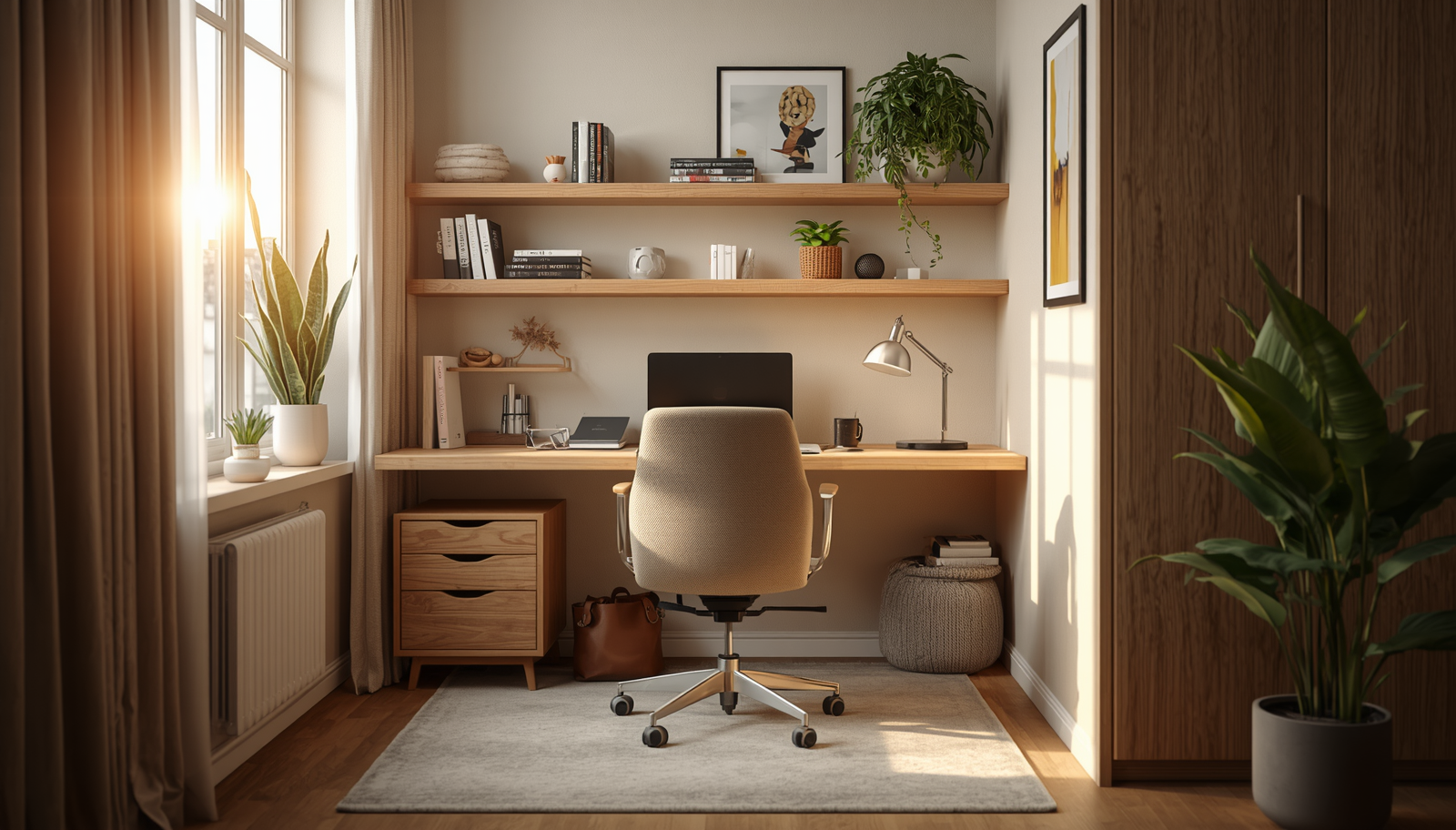
Learn the 5 essential rules for styling a home office small space so your tiny workspace feels brighter, more organized, and far more productive without looking cramped or cluttered.
The laptop barely fits beside the coffee cup. One charger hangs off the desk like a vine in the jungle. Your chair bumps into the bed every time you stand up. Somehow the tiny corner that was supposed to become your productive dream office now feels like a storage closet with WiFi.
That situation feels painfully familiar for a lot of people working from home. Small spaces can quickly become stressful when every inch feels crowded. I learned this the hard way after trying to run a business from a tiny apartment while also stepping over toys, laundry baskets, and snack crumbs left behind by my daughter. Very glamorous setup, obviously 🙂
The good news is that styling a home office small space does not require a massive budget or a Pinterest-perfect room. A few smart design rules can make even the smallest workspace feel calmer, cleaner, and more productive.
Here are the five essential rules that genuinely make a difference.
Aesthetic matters. Nobody wants to work in a depressing cave with bad lighting and ugly furniture. But functionality always comes first in a small office.
A beautiful workspace becomes useless when you cannot comfortably sit, move, or focus inside it.


Before buying decor, focus on these basics:
I made the mistake of buying cute decor before investing in a decent chair. Huge mistake. My office looked stylish while my back quietly filed complaints against me every afternoon.
Large furniture swallows tiny rooms instantly. Choose slim desks, narrow shelving, and compact seating instead.
A floating desk works especially well in apartments or bedrooms because it creates visual openness. Bulky executive desks belong in giant suburban houses where people also own wine cellars and probably alphabetize their spices.
You should move around your office without performing gymnastics.
Leave enough room to slide your chair back comfortably and walk through the space naturally. If you constantly bump into furniture, your office will feel stressful no matter how pretty it looks.
Takeaway: A functional workspace always feels better than a beautiful workspace that frustrates you daily.
Because honestly, it kind of does.
Most people styling a home office small space forget about wall storage completely. They cram everything onto the desk instead, then wonder why the room feels chaotic.


Floating shelves add storage without taking valuable floor space. Use them for books, planners, storage baskets, or decorative pieces.
Pegboards make small offices feel organized instantly. They also hide random clutter surprisingly well, FYI.
You can hang:
A narrow vertical cabinet stores far more than wide furniture while taking up less room visually.
One tall bookshelf completely changed my office setup. Suddenly my desk stopped looking like a chaotic flea market table covered in notebooks and cables.
Do not overload every wall with art and decor. Small rooms feel cramped quickly when too much visual stuff competes for attention.
Stick to one or two statement pieces instead.
Takeaway: Vertical storage keeps small offices functional without sacrificing style or breathing room.
Small dark rooms drain energy fast. After a few hours, the space starts feeling weirdly heavy and sleepy.
Lighting changes everything in a home office small space.


Light tones help reflect brightness and visually expand the room.
Great options include:
I switched from dark furniture to light oak finishes and honestly could not believe the difference. My office suddenly looked twice as large. Magic? Probably not. Still impressive though.
Natural light boosts focus and mood more than people realize.
Even partial sunlight helps reduce eye strain and mental fatigue. My productivity improved noticeably once I stopped working in a dim corner beside a pile of laundry. Revolutionary concept, apparently.
Natural light alone will not carry you through late work nights.
Use:
That layered setup makes the room feel balanced instead of harsh.
Takeaway: Bright colors and natural light make tiny offices feel bigger, calmer, and easier to work in.
Clutter multiplies at alarming speed in small spaces. One unopened package becomes three. One notebook becomes seven. Suddenly your workspace looks like a lost-and-found bin :/
The key to styling a home office small space is learning how to hide everyday mess effectively.

Open shelves look nice online. In real life, they often become clutter displays.
Closed storage creates a cleaner visual appearance because it hides all the random life stuff nobody wants to see during Zoom meetings.
Nothing ruins a stylish workspace faster than tangled cords hanging everywhere.
Simple fixes include:
One afternoon spent organizing cords made my office feel instantly more expensive. Funny how visible cables somehow make everything look fifteen years older.
Every evening, spend five minutes resetting your desk.
Put supplies away. Toss trash. Clear dishes. Wipe surfaces.
Tiny habits prevent giant messes later.
As a mom and business owner, I learned quickly that clutter never magically disappears overnight. Sadly, no helpful cleaning fairy has arrived yet.
Takeaway: Hidden storage and simple organization habits keep small offices calm and productive.
A workspace should feel personal. Otherwise it starts looking like a sad waiting room where creativity goes to die.
But there is a fine line between personality and clutter.


Instead of filling shelves with random trendy items, focus on a few things that genuinely make you happy.
Ideas include:
I keep one tiny framed drawing from my daughter beside my monitor. It definitely does not match my neutral office aesthetic, but honestly, it matters more than matching decor.
Small offices can feel cold if everything looks flat and sterile.
Bring softness into the space with:
That cozy layer makes the office feel welcoming instead of overly corporate.
This part matters.
Every empty corner does not need filling. Leaving some open space actually makes the room feel more peaceful and intentional.
IMO, the best small home offices look lived-in but not overcrowded.
Takeaway: A few meaningful details create personality without overwhelming the room.
Even stylish offices can become uncomfortable when certain design mistakes creep in.
Oddly enough, this can make the room feel smaller instead of larger.
Huge chairs, giant artwork, and bulky storage overwhelm compact rooms quickly.
Pretty setups lose their charm fast when your neck and back hurt constantly.
Too many competing colors create visual stress and make small spaces feel messy.
A productive office should feel comfortable enough that you actually want to sit there for hours.
Takeaway: Small spaces need thoughtful editing, not endless decorating.
Styling a home office small space becomes much easier when you focus on function, lighting, organization, and comfort first.
You do not need a massive dedicated office to create a productive workspace. Most people simply need smarter layouts, less clutter, and furniture that fits the room properly.
Start small. Add vertical storage. Move your desk closer to natural light. Hide the cable jungle under your desk. Replace one bulky piece of furniture with something slimmer.
Tiny upgrades create huge changes over time.
Because honestly, working from home already comes with enough chaos. Your workspace should help you think clearly instead of making you question every life decision before noon.